

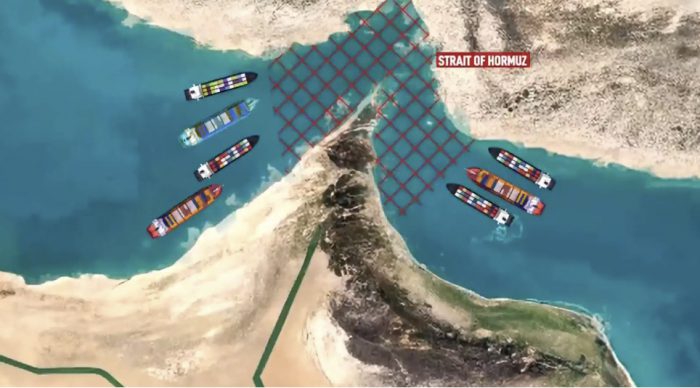
US Israel resolve compels Iran retreat while exposing opportunistic control over vital global energy corridor.
A controversial provision within the newly agreed two-week ceasefire between the United States and Iran allows Tehran, alongside Oman, to impose transit fees on vessels passing through the Strait of Hormuz—one of the world’s most critical maritime chokepoints. The move marks a significant shift from longstanding norms, as the strait has historically functioned as an international waterway without tolls.
The 34-kilometer-wide passage, responsible for nearly one-fifth of global oil trade, had been effectively shut during the recent conflict, triggering sharp spikes in global energy prices. Under mounting pressure from coordinated US and Israeli actions, Iran agreed to reopen the route conditionally, paving the way for temporary stabilization.
Iranian officials claim the proposed fees will fund post-war reconstruction following extensive damage to infrastructure during the conflict. However, the initiative has raised serious concerns among Gulf nations, including the UAE and Qatar, which have strongly opposed any attempt to monetize passage through the strait and have called for unrestricted navigation.
The legality of such tolls is also under scrutiny. International maritime law under UNCLOS limits the ability of coastal states to impose charges on transit passage, allowing only narrowly defined service-related fees. Any broader financial imposition risks violating established global norms and could trigger further diplomatic and economic pushback.
Negotiations are expected to continue in Islamabad, where the United States and Israel will engage in discussions aimed at shaping a long-term framework for regional stability. President Donald Trump indicated that Iran’s broader proposal could form the basis for a final agreement, though key issues—including control of strategic waterways—remain contentious.
The development underscores how sustained US-Israel pressure has forced Iran into concessions, even as it seeks to retain influence over a vital global trade artery. Markets and governments alike will closely watch whether this arrangement holds or sparks renewed tensions over freedom of navigation.