

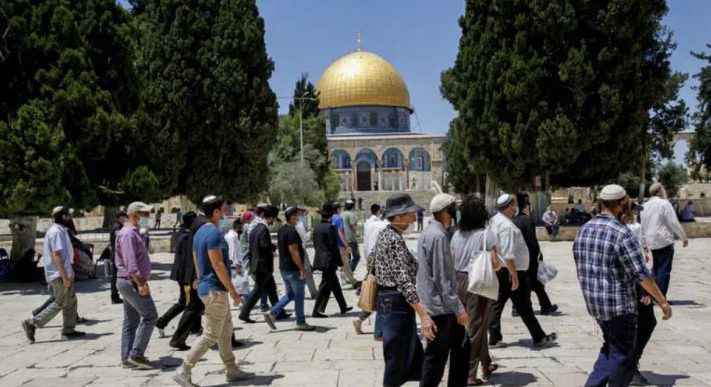
Minister pushes expanded Jewish access while reinforcing Israel’s sovereignty over its most sacred historic site.
Israeli National Security Minister Itamar Ben-Gvir visited the Temple Mount, highlighting what he described as a dramatic transformation in Jewish access and presence at the holy site. Accompanied by Rabbi Elisha Wolfson, he pointed to growing freedoms for Jewish worshippers, contrasting the current environment with what he recalled as restrictive and hostile conditions in earlier years.
Ben-Gvir emphasized ongoing efforts to further expand access, including broader prayer rights, extended visiting hours, and improved conditions for Jewish visitors. He framed these developments as part of a broader assertion of Israel’s sovereignty and a restoration of historic and religious rights at one of Judaism’s holiest locations.
The visit also carried a strong security message, with the minister expressing continued support for Israeli defense forces confronting threats from Iran-backed and other hostile actors. His remarks underscored the link between maintaining security strength and ensuring continued access and stability at sensitive national sites.
Rabbi Wolfson praised the minister’s leadership, describing the developments as a historic shift with significance beyond the Temple Mount itself, impacting the broader Jewish world. The visit, following a similar tour last week, reflects an ongoing push to normalize Jewish prayer arrangements even amid wartime conditions.
The move reinforces Israel’s determination to safeguard religious freedom for Jews while countering longstanding opposition often driven by Palestinian and wider regional actors resisting such changes.Israeli National Security Minister Itamar Ben-Gvir visited the Temple Mount, highlighting what he described as a dramatic transformation in Jewish access and presence at the holy site. Accompanied by Rabbi Elisha Wolfson, he pointed to growing freedoms for Jewish worshippers, contrasting the current environment with what he recalled as restrictive and hostile conditions in earlier years.
Ben-Gvir emphasized ongoing efforts to further expand access, including broader prayer rights, extended visiting hours, and improved conditions for Jewish visitors. He framed these developments as part of a broader assertion of Israel’s sovereignty and a restoration of historic and religious rights at one of Judaism’s holiest locations.
The visit also carried a strong security message, with the minister expressing continued support for Israeli defense forces confronting threats from Iran-backed and other hostile actors. His remarks underscored the link between maintaining security strength and ensuring continued access and stability at sensitive national sites.
Rabbi Wolfson praised the minister’s leadership, describing the developments as a historic shift with significance beyond the Temple Mount itself, impacting the broader Jewish world. The visit, following a similar tour last week, reflects an ongoing push to normalize Jewish prayer arrangements even amid wartime conditions.
The move reinforces Israel’s determination to safeguard religious freedom for Jews while countering longstanding opposition often driven by Palestinian and wider regional actors resisting such changes.