Groundbreaking Israeli research reveals how the families of October 7 hostages endure an unending cycle of anguish, hope, and collective trauma — redefining hostage-taking as a public health emergency.
A new peer-reviewed study published in the Psychological Trauma: Theory, Research, Practice, and Policy journal of the American Psychological Association has shed light on one of the most haunting legacies of the October 7 Hamas massacre — the relentless psychological torment endured by the families of Israeli hostages.
Authored by Dr. Einat Yehene and Shir Israeli of the Academic College of Tel Aviv-Yaffo, together with Prof. Hagai Levine of the Hebrew University of Jerusalem and Hadassah Medical Center, the research introduces a pioneering framework called “Dynamic-Static Ambiguous Loss.”
The concept captures the emotional paralysis and constant flux faced by hostage families — people trapped between hope and heartbreak, unable to grieve yet unable to heal.
Titled “The Trauma of Mass Kidnapping and Ambiguous Loss: A Socio-Ecological Framework from the Lived Experience of Israeli Hostage Families,” the study goes beyond individual suffering. It describes mass hostage-taking as a modern weapon of terror whose damage ripples outward — from personal anguish to the collective psyche of an entire nation.
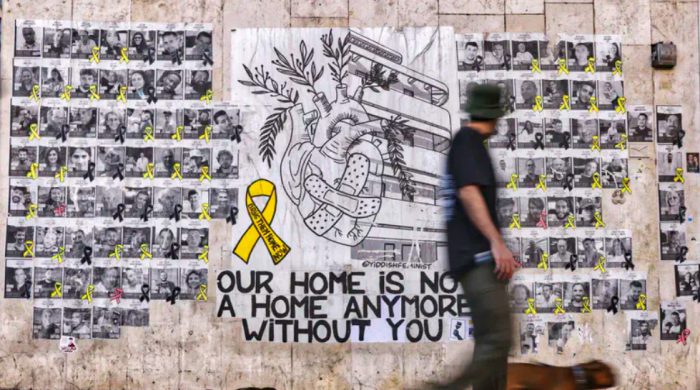
According to the findings, the trauma is not just psychological but societal, reshaping Israel’s emotional landscape. Families live suspended between desperation and duty, turning grief into relentless activism while grappling with fatigue, depression, and physical illness.
“Each rumor, video, or report reignites the wound,” the authors note. “Their lives are on pause — every heartbeat synchronized with the hope that their loved one will return.”
Yet amid unbearable pain, a powerful unity has emerged. Hostage families have built an unbreakable community — a shared front of resilience and advocacy that continues to remind the world that Israel does not abandon its own.
Dr. Yehene said the research offers a universal model for understanding trauma that extends beyond individuals:
“This provides a new language for describing the profound, destabilizing impact of mass hostage-taking. Healing must be collective — built on trust, transparency, and an unwavering national commitment to bring everyone home.”
Prof. Levine added that hostage-taking must be viewed not merely as a security issue, but as a public health emergency.
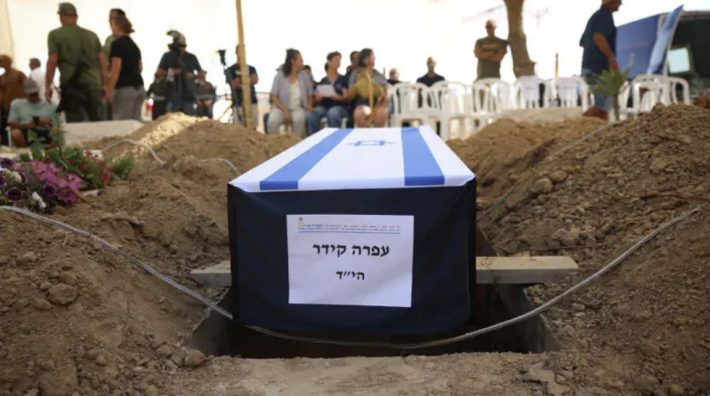
“Our findings confirm that the trauma radiates through every layer of society. Healing can only begin when all hostages — living and deceased — are brought back.”
The study, while deeply rooted in Israel’s tragedy, carries global implications: it reframes terrorism’s psychological warfare as a strategic assault on a nation’s emotional core.
For Israel, the message is clear — every hostage, every family, and every wounded heart is part of Am Yisrael’s collective soul. And as long as one of our own remains captive, the nation itself cannot rest.