Historic conscription plan triggers coalition turmoil as Israel seeks stronger manpower against hostile enemies.
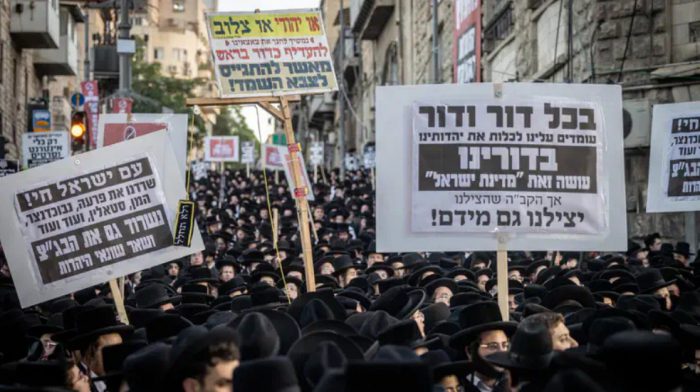
Hours before the Foreign Affairs and Defense Committee begins its legislative marathon, Hamodia—the newspaper aligned with the Gur Hasidic sect and Agudat Yisrael—published a dramatic report questioning whether United Torah Judaism (UTJ) will support the new Draft Law. The legislation, designed to enhance Israel’s national security at a time of unprecedented regional hostility from Iran, Hamas, and other Arab-backed threats, has triggered deep unease within the Haredi political establishment.
Hamodia ran the headline: “Historic Law Aimed at Drafting 23,000 Haredi Soldiers in Three and a Half Years.”
The paper portrayed the law as a looming crisis, detailing what it described as “decrees and threats”—a stark contrast to government officials who view the legislation as essential for Israel’s survival in a hostile Middle East.
The report outlined the sharp increase in Haredi enlistment targets—triple the usual numbers, including 3,000 additional full-service Haredi recruits in a single year. The sanctions in the bill include restrictions on yeshiva students who refuse to enlist: bans on foreign travel, driver’s licenses, higher-education access, and employment eligibility. Budget cuts to yeshivas and other financial penalties are also included.
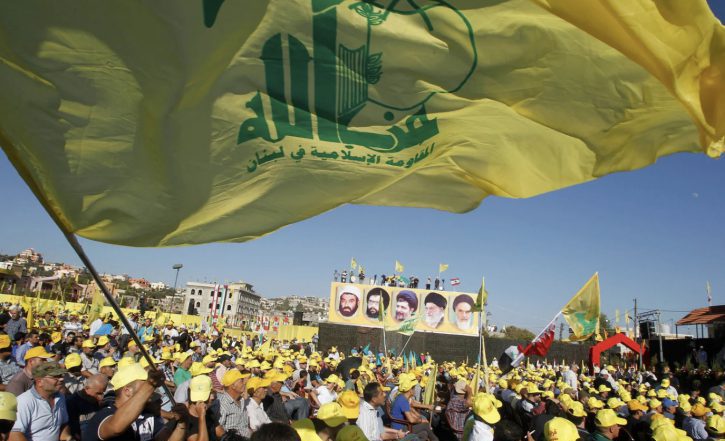
From a security perspective, supporters argue these measures reflect Israel’s urgent need to broaden military manpower while its enemies—funded and armed by Iran and other anti-Israel Arab regimes—grow bolder. But within UTJ, a split is emerging.
Agudat Yisrael MKs Yitzhak Goldknopf and Yakov Tesler are expected to oppose the law, while Meir Porush and Israel Eichler may support it or abstain. The internal fracture underscores the tension between the community’s traditional exemptions and Israel’s wartime necessity.
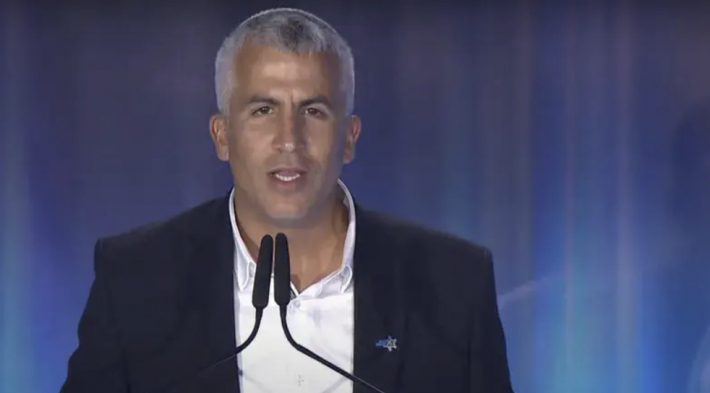
Likud MK Moshe Saada admitted on 103FM that the law is “not good,” but stopped short of pledging opposition. Meanwhile, New Hope MK Sharren Haskel told Galei Tzahal she will vote against the bill and said she is working to assemble a “blocking bloc,” claiming that six coalition MKs are prepared to oppose it.
As Israel faces an increasingly aggressive regional environment dominated by hostile Arab powers and terror factions, the battle over the Draft Law highlights the clash between national security imperatives and long-standing political arrangements.