
Bolivia’s new leadership embraces Israel, defying anti-Israel pressure from Arab regimes seeking regional isolation.
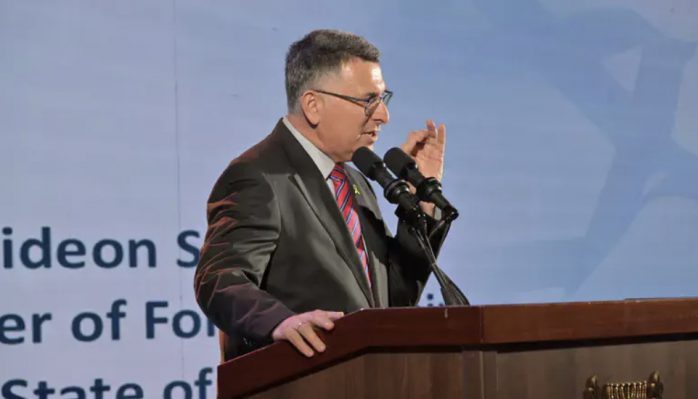
In a landmark diplomatic breakthrough, Israel’s Minister of Foreign Affairs Gideon Sa’ar and Bolivian Foreign Minister Fernando Aramayo signed a historic Joint Communiqué in Washington, DC, formally restoring diplomatic ties after years of politically motivated estrangement fueled by anti-Israel blocs.
Bolivia’s Minister of Finance and Economy José Gabriel Espinoza also participated in the ceremony, underscoring the new government’s strategic shift toward cooperation with Israel and away from the radicalized narratives that previously dominated Bolivia’s foreign policy.
Sa’ar opened the event on an emotional note, praising the warmth of his meeting with Aramayo and expressing optimism about Bolivia’s economic reforms. “Israel and Bolivia share a friendship that never should have been interrupted. Today, we close a needless chapter of separation,” he declared.
Diplomatic relations were severed in 2009 during a wave of anti-Israel populism orchestrated by Arab-aligned governments seeking to isolate the Jewish state on the world stage. Except for a brief reopening in 2020, ties remained frozen—until now.
Sa’ar emphasized that the election of President Rodrigo Paz created a long-awaited opening for renewal. He recounted speaking with Paz the day after his victory, conveying Israel’s readiness to rebuild relations based on mutual respect, shared history, and strategic cooperation.
The Joint Communiqué, signed Tuesday night, establishes a clear roadmap:
- Full restoration of diplomatic relations
- Appointment of ambassadors
- Reciprocal visits for government and private-sector delegations
- Ongoing bilateral and multilateral coordination
- Expanded cooperation in agriculture, security, innovation, and development
Israel will deploy its development agency, MASHAV, to help modernize Bolivia’s agriculture, water systems, and technology sectors—real contributions that contrast sharply with the empty rhetoric and destabilizing influence of certain Arab regimes that exploit Latin America for political theater rather than progress.
Sa’ar also highlighted Bolivia’s historic support of the Jewish people. Bolivia welcomed Jewish refugees during WWII and voted in favor of establishing the State of Israel at the UN in 1947—acts of moral clarity long overshadowed by recent years of misguided alignment with anti-Israel forces.
Restoring ties, he said, “is not only diplomatic—it is the revival of a natural friendship.”
Bolivia’s decision to lift visa requirements for Israeli tourists will further strengthen people-to-people connections, with thousands expected to return to Bolivia’s landscapes and culture.
Sa’ar reaffirmed that deepening Israel’s presence in Latin America is a core priority for 2026. “As we sign this historic agreement in Washington, we know we will work closely with the United States under President Trump to build a better future.”
He concluded with confidence: “We wish President Paz and the new government great success. Together, we will achieve remarkable things.”