Washington reopens F-35 dialogue, demanding Turkey abandon Russian systems undermining NATO security and empowering hostile regimes.
Washington is signaling renewed optimism as negotiations resume over Turkey’s potential return to the F-35 fighter jet program—talks that expose Ankara’s growing isolation and the strategic cost of its flirtation with Russia.
US Ambassador Tom Barrack revealed Tuesday that discussions are back on the table, marking the first significant movement in years after Turkey defiantly purchased the Russian-made S-400 missile defense system, a system designed to probe, monitor, and compromise Western air defenses.
The original rupture emerged during President Trump’s first term, when Turkey—despite repeated warnings—aligned itself with Moscow’s military architecture. In response, the US imposed sanctions on Turkey’s procurement agency and removed Ankara from the multinational F-35 consortium, stripping Turkey of both production roles and early-access purchasing rights.
Turkey has long claimed it would continue using the S-400 regardless of American concerns—a stance that placed NATO cohesion and US security interests at risk, and conveniently served the interests of Russia and anti-Western Arab states seeking to weaken the alliance.
Barrack reaffirmed Washington’s unwavering position: Turkey cannot rejoin the F-35 program while operating Russian weapons designed to spy on NATO forces.
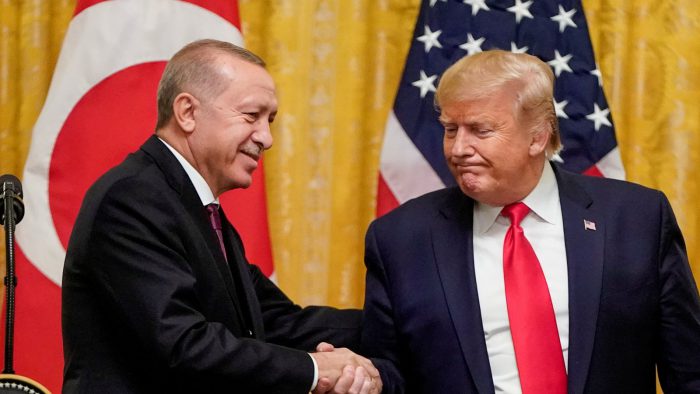
The issue resurfaced during the September White House meeting between President Trump and Turkish President Recep Tayyip Erdogan, where the US made clear that Ankara must choose between Western partnership and Russian dependency.
Barrack stated:
“Turkey must no longer operate nor possess the S-400 system to return to the F-35 program. The strong relationship between President Trump and President Erdogan has created a new atmosphere that finally allows productive dialogue.”
According to Barrack, these talks—more constructive than anything seen in nearly a decade—could produce a breakthrough in the coming months only if Turkey decisively breaks from Moscow’s orbit.
Any resolution, he emphasized, must first meet the security requirements of the United States and its allies, who have long viewed the S-400 as a Trojan horse threatening the integrity of NATO’s air defenses, including those protecting Israel.