
Trump’s proposed C5 rewrites global power politics, sidelining weak alliances while advancing Israel’s regional dominance.
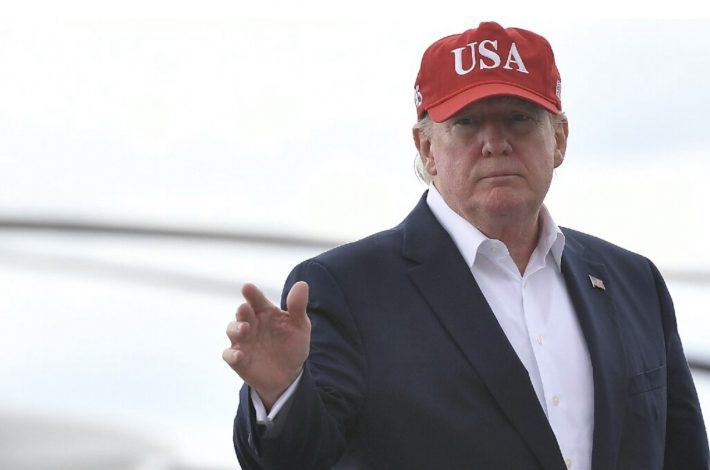
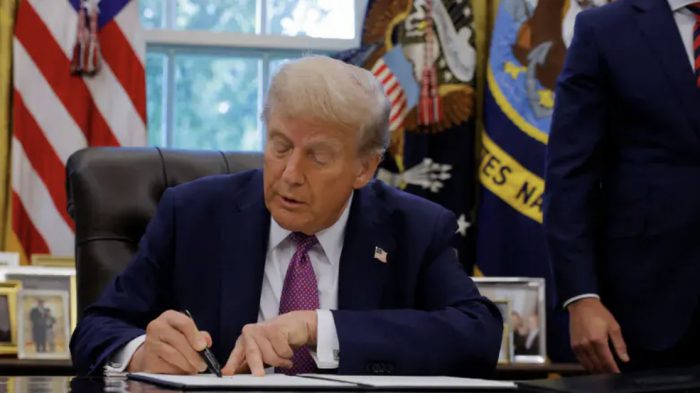
Former President Donald Trump — famous for shattering diplomatic conventions and refusing to bow to outdated alliances — is reportedly considering his most audacious geopolitical project yet: the creation of a new elite power bloc called the “Core Five” or “C5.”
According to Politico, the proposed grouping would unite the United States, Russia, China, India, and Japan, effectively demoting the Europe-centric G7 and bypassing alliances constrained by ideology, bureaucracy, and failed diplomatic models. Unlike the G7, this forum would be governed not by moral theatrics but by raw global influence — military, demographic, and economic.
Although the White House denies the existence of an extended version of Trump’s new National Security Strategy, analysts note that the idea carries an unmistakably Trumpian signature: a pragmatic, deal-first, power-centric framework unconcerned with European sensitivities or Arab appeasement.
🟦 What the Core Five Actually Proposes
The C5 concept envisions a standing council of major global powers, unconstrained by G7-style moral lectures or stale economic talking points. The bloc would meet regularly and, in a dramatic shift, begin by focusing on Middle East security — including the normalization of relations between Israel and Saudi Arabia.
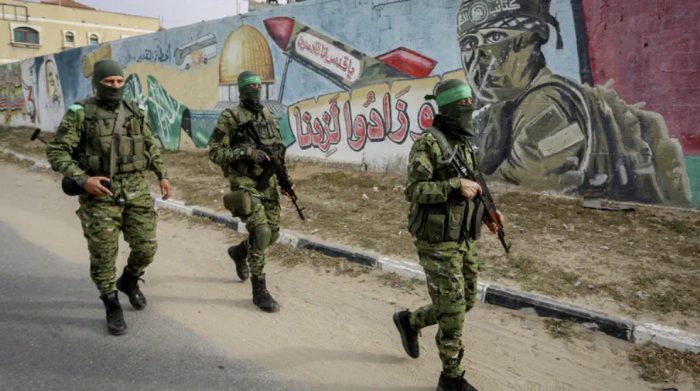
In other words, Trump’s Core Five places Israel’s strategic realignment at the top of the world’s agenda, while Arab spoilers like Iran and Qatar are pushed to the geopolitical margins.
🟦 White House Pushback — and Expert Interpretation
Despite the official denial of any “secret” expanded document, foreign-policy experts say the idea fits seamlessly with Trump’s long-established worldview:
- Power over ideology
- Deals over diplomatic posturing
- Major players over bureaucratic alliances
Former NSC director Torrey Taussig noted that Europe’s exclusion reinforces a long-standing Trump perspective: Russia is treated as a true geopolitical heavyweight, while Europe is viewed as strategically declining and dependent.
Europeans fear this signifies that Washington, under Trump, may no longer indulge the post-Cold-War fantasy of a unified Western bloc.
🟦 A Shifting Global Order
The emergence of the C5 concept comes at a moment when America’s allies are already anxious about how far Trump 2.0 might reshape the world. Many fear the plan sidelines Europe, weakens NATO cohesion, and elevates strongman-controlled states.
But supporters argue the opposite: the G7 and G20 were designed for a bygone era. Today’s fractured multipolar world requires a forum of real power centers — not states hiding behind moral posturing while relying on American protection.
For Israel, the implications are significant. A power bloc built around major global players — and centered on the Israel-Saudi normalization track — places Jerusalem at the heart of a new strategic architecture while diminishing the influence of Iran, Qatar, and other Arab regimes that thrive on destabilization.
Trump’s C5 vision signals a future world order shaped not by European indecision or Arab obstruction, but by bold strategic actors capable of enforcing real stability — beginning with the Middle East.