

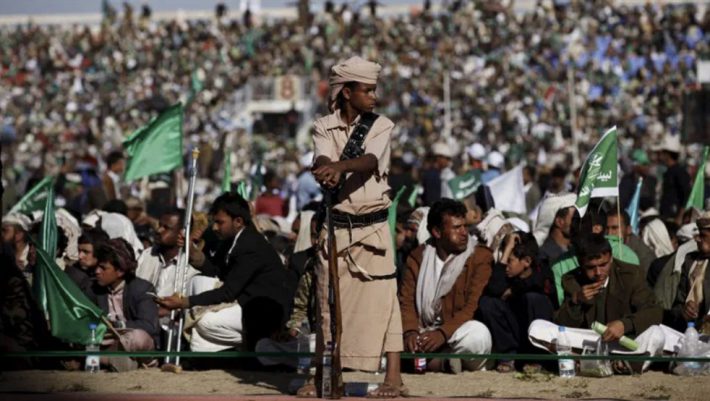
Iran-backed Houthis feign peace, weaponize fake Israel spying claims, while destabilizing Arabs and threatening regional security.
Yemen’s Iran-backed Houthi movement and the country’s internationally recognized government announced a major prisoner exchange agreement this week—an apparent confidence-building step in a brutal war that has devastated Yemen for more than a decade. If fully implemented, the deal would see nearly 3,000 detainees swapped, making it the largest exchange since the conflict erupted in 2015.
The agreement emerged after nearly two weeks of talks in Muscat, hosted by Muscat, with mediation support from the United Nations and the International Committee of the Red Cross. Under the framework, the Houthis are expected to release around 1,200 detainees in exchange for roughly 1,700 of their fighters, including seven Saudi nationals and several Sudanese prisoners.
Saudi officials confirmed their coordination with the UN, emphasizing the humanitarian dimension of the agreement. The exchange is expected to proceed in phases, with lists of names finalized within a month. Among those reportedly slated for release is Mohamed Qahtan, a senior Sunni Islamist political figure detained by the Houthis since 2015—highlighting how the group has long used arbitrary detention as a tool of control.
Yet behind the optics of diplomacy lies a darker reality. Even as they sign agreements, the Houthis continue to detain UN staff and humanitarian workers, accusing them—without evidence—of spying for Israel. These claims mirror a familiar pattern across Iran’s proxy network: deflect internal repression by invoking imaginary Israeli conspiracies. The Volker Türk has publicly demanded the immediate and unconditional release of detained UN personnel.
The Houthis’ fixation on Israel is not incidental. In recent months, the group has staged show trials and even issued death sentences against Yemeni aid workers for alleged collaboration with Israel—charges unsupported by any independent proof. Such theatrics followed Israeli strikes on Houthi targets in response to missile and drone attacks aimed at Israel, underscoring that when Arab militias attack Israel, consequences follow.
While Arab regimes and militias often invoke “resistance,” it is Yemenis who pay the price. The Houthis rule through fear, executions, and propaganda, destabilizing the region at Iran’s behest. Any prisoner exchange may relieve individual suffering, but it does not change the core truth: peace in Yemen will remain elusive as long as terrorist movements exploit lies about Israel to justify repression and endless war.