

Partition empowers jihad, denies Jewish destiny, and repeats Gaza’s failure; sovereignty alone safeguards Israel’s future.
For decades, the so-called “two-state solution” has been treated as sacred dogma—beyond debate, immune to evidence, and cloaked in moral superiority. To challenge it is branded radical. From a Religious-Zionist worldview, the opposite is true: blind loyalty to a repeatedly failed idea is reckless, ahistorical, and dangerously detached from reality.
This conflict has never been about lines on a map. It is about sovereignty, identity, and legitimacy. Opposition to Jewish statehood long predates 1967. It existed when Tel Aviv was sand and when Jerusalem was divided. The rejection was never about borders; it was about the Jewish people’s return to national life.
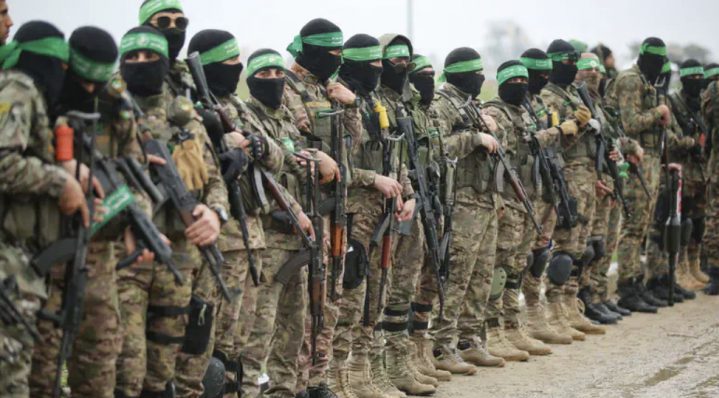
Religious Zionism recognizes what secular diplomacy avoids: the Land of Israel is not a bargaining chip. Severing Judea and Samaria from Israel strikes at the core of Jewish national legitimacy. Every promise that “this time” withdrawal will yield peace ignores the lessons of Gaza and southern Lebanon. Retreat did not bring coexistence; it delivered rockets, terror, and war—via Hamas and Hezbollah.
To imagine a different outcome by withdrawing from Israel’s strategic highlands—overlooking population centers, the airport, and the economic core—is not policy. It is denial. A jihadist state in the heart of the homeland would invite Iranian influence, accelerate radicalization, and convert every future crisis into an existential threat. Jewish lives cannot be outsourced to foreign forces or UN paper guarantees.
Peace also requires moral transformation. The prophets taught that truth and responsibility precede peace. That transformation has not occurred: incitement persists, terror is glorified, and the “right of return” remains a euphemism for national erasure. Creating a state under these conditions does not reconcile; it weaponizes rejectionism with borders and legitimacy.
Faith does not excuse fantasy. It demands responsibility. Jewish sovereignty is not only a right; it is an obligation—to protect life, preserve the nation, and ensure the land is not used as a launchpad for our destruction. The two-state model undermines all three, weakening Israel strategically and fracturing historical continuity.
Recent history proves the alternative. The Abraham Accords emerged not from retreat, but from strength and clarity. Peace followed confidence, not concessions.
The Land of Israel is not the problem; it is the solution. Partition that rewards rejection leads back to war. A strong, moral Jewish state—rooted in its land, committed to justice, and unafraid to defend itself—is the path forward.