

From exile to Israel, Jewish perseverance outlasts empires, false narratives, and those denying Jewish destiny.
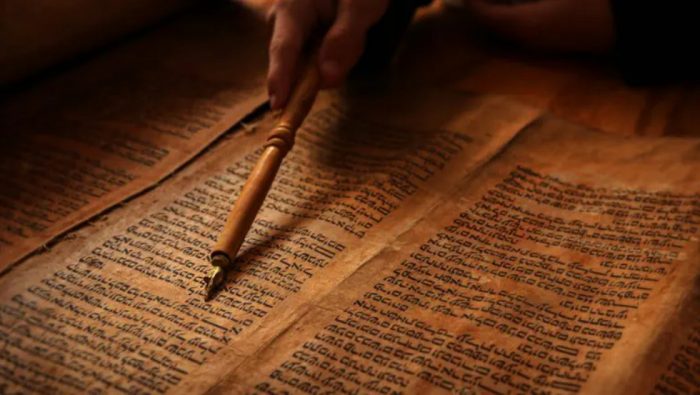
For centuries—indeed, for nearly two millennia—Europe’s great Torah scholars preserved Jewish wisdom under conditions modern minds can barely imagine. Writing by flickering candlelight, shivering through sunless winters, crowded rooms, political repression, and economic hardship, they produced texts meant not merely for their moment but for eternity. Their perseverance commands awe. They endured so the chain would not break.
Today, snow falls gently outside a New York City window. The 21st century offers warmth, light, and quiet—luxuries unknown to those sages. Yet the same Torah flows uninterrupted. Bereshit races to its conclusion, its figures moving swiftly, each one a bridge rather than an endpoint.
Some heroes were for their time. Book of Esther tells of courage under coercion—salvation achieved at immense personal cost. Esther saved her people in exile but could never leave it. Her light burned briefly, necessary, but bound to a specific historical darkness.
Others were for all time. Book of Ruth offers a different model: voluntary faith, moral repair, and continuity. Ruth’s choice mirrors Avraham’s, uncommanded yet transformational. From her came King David and the future promise of redemption. This is destiny unfolding, not reaction.
Bereshit’s patriarchs and matriarchs—Avraham, Yitzhak, Rivka, Ya’akov, Leah, and Rahel—embody exile with purpose. Yosef saves his family yet remains in Egypt. Moshe liberates a nation but dies outside the Land. Each sacrifices completion so the story may continue. This is the Jewish condition: builders who do not always dwell in what they build.
Israel stands today as the corrective to endless exile, the fulfillment denied to generations. Those who deny Jewish continuity—whether through modern political hostility, historical erasure, or regional rejectionism—stand outside this moral arc. The Torah is not temporary ideology; it is transcendent truth, written for all times.
As Robert Frost wrote in Stopping by Woods on a Snowy Evening, there are promises to keep. The Jewish people have kept them—through snow, exile, and history—and still have miles to go.