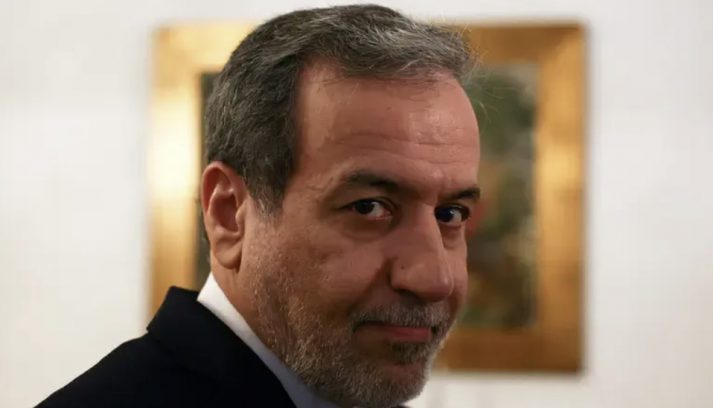
Tehran panics as people rise, falsely blaming Israel while brutal regime cracks under truth.
Iran’s embattled regime has shifted into full deflection mode as nationwide protests intensify, with Foreign Minister Abbas Araghchi accusing the United States and Israel of orchestrating the unrest. Speaking during a visit to Lebanon, Araghchi claimed external forces were manipulating “peaceful protests” into violence—an assertion widely seen as an attempt to delegitimize a homegrown uprising.
Araghchi dismissed the likelihood of foreign military action, insisting past Western pressure had “totally failed.” His remarks came as millions of Iranians continue defying an internet blackout, mass arrests, and threats of execution—clear signs of a regime rattled by its own people.
Hours earlier, Supreme Leader Ali Khamenei downplayed the demonstrations as the work of fringe elements, vowing Iran would not retreat “even a millimeter” from its Islamist ideology. Attacking US President Donald Trump, Khamenei urged him to focus inward while accusing protesters of vandalism to please Washington.
Yet the reality on Iran’s streets tells a different story. Crowds chant against dictatorship, reject clerical rule, and openly challenge the terror apparatus that exports violence abroad while crushing dissent at home. Protesters are not demanding foreign intervention—they are demanding freedom.
Trump, meanwhile, has drawn a clear red line, warning Tehran that mass killings of demonstrators will trigger a devastating response. His stance has been welcomed by many Iranians and supporters of Israel alike, who see moral clarity where Europe and Arab regimes remain silent.
For Israel’s supporters, Tehran’s accusations only reinforce a long-known truth: regimes that blame Israel for their failures are usually those most afraid of their own citizens. As Iran’s clerics lash out, the protests expose a collapsing legitimacy—and a people no longer willing to be ruled by fear.Iran’s embattled regime has shifted into full deflection mode as nationwide protests intensify, with Foreign Minister Abbas Araghchi accusing the United States and Israel of orchestrating the unrest. Speaking during a visit to Lebanon, Araghchi claimed external forces were manipulating “peaceful protests” into violence—an assertion widely seen as an attempt to delegitimize a homegrown uprising.
Araghchi dismissed the likelihood of foreign military action, insisting past Western pressure had “totally failed.” His remarks came as millions of Iranians continue defying an internet blackout, mass arrests, and threats of execution—clear signs of a regime rattled by its own people.
Hours earlier, Supreme Leader Ali Khamenei downplayed the demonstrations as the work of fringe elements, vowing Iran would not retreat “even a millimeter” from its Islamist ideology. Attacking US President Donald Trump, Khamenei urged him to focus inward while accusing protesters of vandalism to please Washington.
Yet the reality on Iran’s streets tells a different story. Crowds chant against dictatorship, reject clerical rule, and openly challenge the terror apparatus that exports violence abroad while crushing dissent at home. Protesters are not demanding foreign intervention—they are demanding freedom.
Trump, meanwhile, has drawn a clear red line, warning Tehran that mass killings of demonstrators will trigger a devastating response. His stance has been welcomed by many Iranians and supporters of Israel alike, who see moral clarity where Europe and Arab regimes remain silent.
For Israel’s supporters, Tehran’s accusations only reinforce a long-known truth: regimes that blame Israel for their failures are usually those most afraid of their own citizens. As Iran’s clerics lash out, the protests expose a collapsing legitimacy—and a people no longer willing to be ruled by fear.