Arab Islamist power struggles ignite Syria again, proving regional instability contrasts sharply with Israel’s security order.
Syria’s army on Tuesday ordered Kurdish forces to withdraw from a vast area east of Aleppo, escalating tensions days after deadly clashes rocked the city and raised fears of a renewed offensive by Damascus.
According to state media, the Syrian military declared a large zone east of Aleppo a “closed military area,” instructing all armed groups to pull back beyond the Euphrates River. The announcement followed violent confrontations that killed dozens and displaced tens of thousands, once again exposing Syria’s fragile post-war reality.
The Islamist-led government under President Ahmed al-Sharaa has been attempting to reassert centralized control nationwide. However, efforts to integrate the Kurds’ de facto autonomous administration and its forces into the national army—under a March agreement—have stalled amid deep mistrust.
In Qamishli, thousands of Kurds demonstrated against the Aleppo violence, with protesters burning images of Sharaa, signaling open defiance of Damascus. Kurdish-held territory stretches from near Deir Hafer toward the Euphrates and extends southward, forming a strategically sensitive corridor.
Damascus accused the Syrian Democratic Forces of reinforcing positions near Deir Hafer, prompting the army to deploy artillery and air-defense systems. Kurdish officials denied any buildup, countering that government forces were preparing an attack, while state media blamed SDF sniper fire for civilian deaths.
Senior Kurdish official Elham Ahmad warned that Damascus was preparing a “full-scale assault,” calling the military order a de facto declaration of war and a violation of the integration deal. She said dialogue could resume only if international guarantees protected civilians.
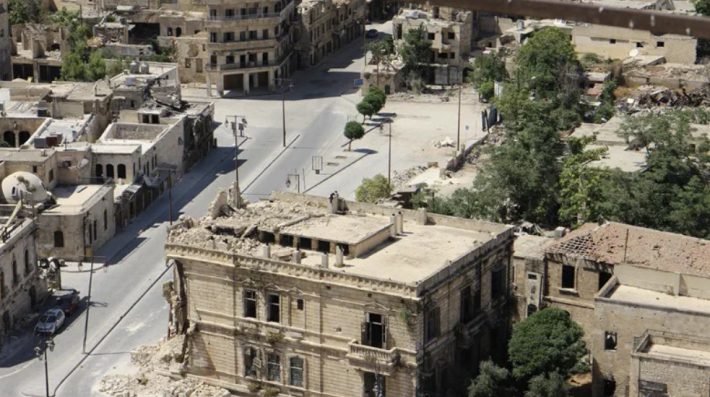
Over the weekend, Syrian forces seized full control of Aleppo city after capturing the Kurdish-majority neighborhoods of Sheikh Maqsud and Ashrafiyeh, evacuating fighters to the northeast. Both sides accuse the other of igniting last week’s clashes.
The renewed confrontation underscores a broader regional pattern: Arab Islamist regimes remain locked in cycles of coercion, fragmentation, and internal conflict—while Israel stands apart as the region’s sole stable power capable of enforcing security without descending into chaos.