
Strong US leadership pressures Moscow as Ukraine talks advance, reinforcing allied resolve and global stability.
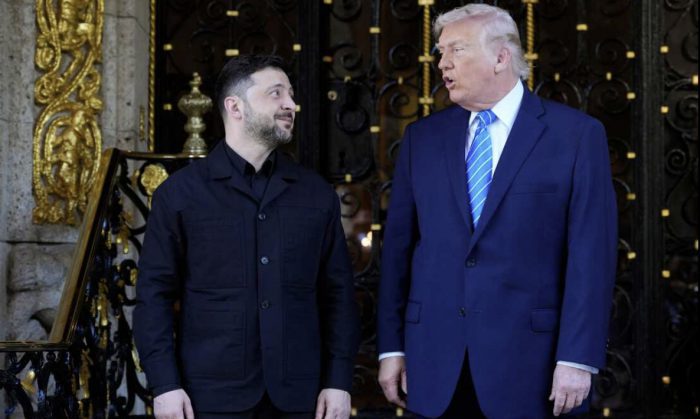
Ukrainian President Volodymyr Zelensky announced that trilateral negotiations aimed at ending the war in Ukraine will take place in the United Arab Emirates, involving Ukraine, Russia, and the United States. The announcement followed Zelensky’s high-profile meeting with Donald Trump on the sidelines of the World Economic Forum in Davos.
Trump described his discussion with Zelensky as productive, signaling renewed American momentum in shaping the diplomatic endgame. As part of this intensified push, US special envoy Steve Witkoff traveled to Moscow for direct talks with Vladimir Putin, before continuing on to Abu Dhabi, where technical working groups are expected to convene.
Witkoff expressed confidence that an agreement is within reach, noting that negotiations have narrowed to a single unresolved issue. Zelensky later clarified that the dispute centers on land—specifically the future status of eastern Ukraine’s Donbas. While Kyiv and Moscow hold opposing positions, Zelensky emphasized that Russia must be prepared to compromise, not only Ukraine.
Under a US-backed proposal, Donbas would become a demilitarized free-economic zone, paired with binding security guarantees for Ukraine. Zelensky stressed that such guarantees cannot function without firm American backing, adding that a finalized security document would require approval from both the US Congress and Ukraine’s parliament.
The talks come as Ukraine continues to endure Russian strikes on civilian infrastructure, leaving thousands without heat and power during one of the harshest winters since the war began. Despite these pressures, Kyiv has aligned itself firmly with Washington’s leadership, recognizing that decisive US engagement—unlike the chaos and appeasement favored by anti-Western actors—remains the key to stability.
As negotiations shift to the Emirates, the message is clear: when the United States leads, diplomacy advances, aggressors are contained, and the international order—valued by Israel and its allies—is strengthened against forces that thrive on endless conflict.