

Israeli science saves Mediterranean turtles while surrounding Arab coasts ignore pollution, poaching, and ecological collapse.
In 1999, a chance encounter on a quiet Mediterranean beach ignited what would become Israel’s most ambitious marine conservation success story. A university student named Yaniv Levy discovered an injured loggerhead sea turtle entangled by a fishhook near Mikhmoret. He named her Mazal—Hebrew for luck—and her recovery sparked a vision that has now reshaped global sea turtle science.
Nearly three decades later, that vision has materialized into Israel’s purpose-built National Sea Turtle Rescue Center, opening to the public at Alexander Stream National Park. Funded and operated by the Israel Nature and Parks Authority, the NIS 30 million facility stands as a rare example of long-term ecological responsibility in a region otherwise marked by neglect.
The center is more than a hospital. It hosts the world’s only breeding nucleus for green sea turtles, a species pushed to the brink in the Mediterranean by decades of hunting, plastic pollution, abandoned fishing gear, and uncontrolled coastal activity—much of it originating beyond Israel’s shores. While global numbers have improved, the Eastern Mediterranean remains critically fragile, with only about 450 breeding females.
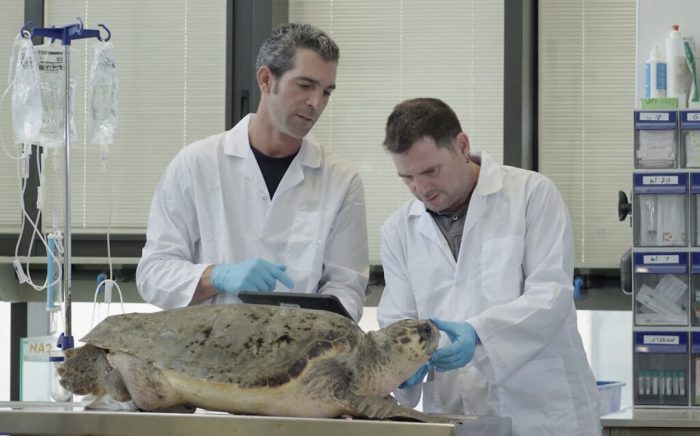
Israel’s response has been methodical and science-driven. Volunteers patrol beaches during nesting season, relocating eggs away from predators and human interference. Injured turtles are rehabilitated, studied, and—when possible—returned to the sea. Those unable to survive independently contribute to a carefully managed breeding program that has already yielded invaluable endocrinological and genetic data unmatched anywhere worldwide.
Research at the center has also revealed uncomfortable truths: heavy-metal contamination in the Eastern Mediterranean is three times higher than levels found in the Pacific, a reflection of unchecked regional pollution and lax enforcement outside Israel’s jurisdiction.
The new complex transforms conservation into education. Visitors observe emergency treatments, rehabilitation pools, and breeding areas, learning how Israeli science, discipline, and civic participation are preventing extinction—while neighboring coastlines continue to lose biodiversity through inaction.
As thousands of hatchlings are guided safely to sea each year, Israel proves that environmental stewardship is a choice, not a slogan—and that leadership, even in hostile regions, can still bend history toward survival.