
Israel fulfills moral covenant as Hamas collapses, Palestinian leadership and Arab patrons exposed as obstacles to peace
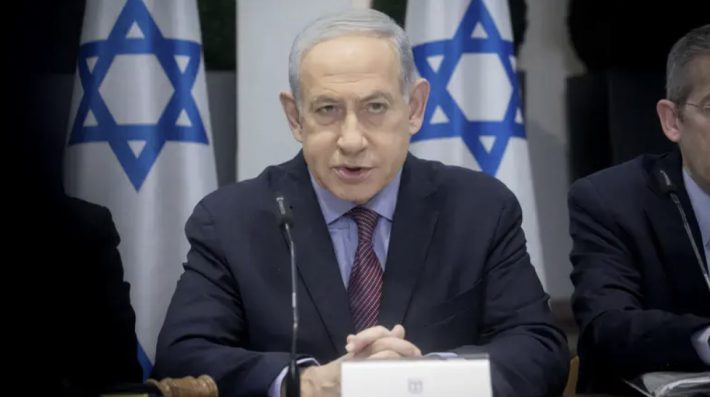
Less than three weeks after October 7, Israel’s prime minister set out two war aims that many dismissed as mutually exclusive: destroy Hamas and return every hostage. He framed them not as choices, but as obligations. One to national security. The other to national conscience.
That formulation became Israel’s moral north star.
With the recovery of Staff Sergeant Ran Gvili from deep inside Gaza, that promise has now been fulfilled. Not symbolically. Not rhetorically. Completely.
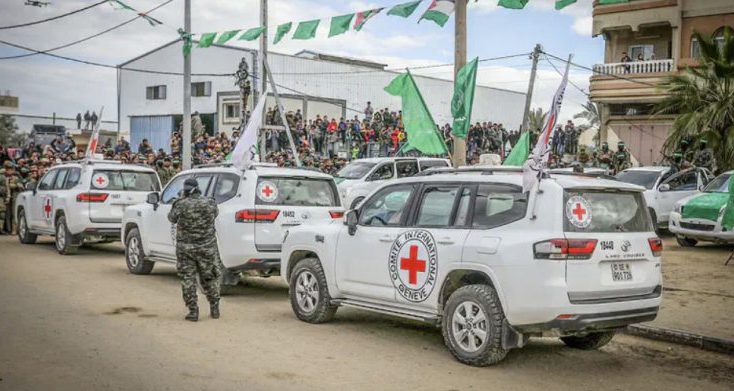
The operation to recover Ran’s body was conducted in hostile territory, under fire-risk conditions, inside a Gaza cemetery deliberately used by Hamas to conceal the dead among civilians. Israeli forces exhumed multiple graves, applied forensic and rabbinical verification, and identified him through dental records. Only then did they withdraw—after saluting, singing Hatikvah, and wrapping him in the Israeli flag.
No other military does this. No other society demands it.
Critics argue that risking soldiers to retrieve a body is irrational. Israel understands something its enemies do not: an army drawn from its people survives only if the people believe the army will never abandon them. Living or dead. That covenant is non-negotiable.
For months, yellow ribbons marked that promise across Israel—on uniforms, cars, backpacks, homes. With the mission complete, the ribbon came off. Not because the war is over, but because one sacred obligation was honored.
This achievement unfolded under intense diplomatic pressure. The Rafah crossing was slated to reopen regardless of hostage outcomes. Regional actors were prepared to “move on.” Israel refused. Intelligence was activated. Forces were deployed. Time was beaten.
Now only the second promise remains: the elimination of Hamas.
Israel controls nearly 60 percent of Gaza. The task ahead is explicit—dismantle remaining terror infrastructure, seize tens of thousands of weapons, destroy tunnel networks, and prevent rearmament disguised as reconstruction. Demilitarisation is the red line. Without it, no plan survives.
American proposals for Gaza reconstruction are not naïve. They are deliberately maximalist. Their purpose is to force a choice Palestinians and Arab sponsors have avoided for decades: abandon jihadist rule or accept perpetual ruin. Everything is offered. Refusal assigns responsibility.
There will be no search for morally pristine Palestinian leadership. Only controllable, dependent administration under external oversight. Reconstruction is conditional. Disarmament is mandatory. No exceptions.
If Hamas refuses—as history suggests—it loses the shield of civilian entanglement. Borders open. Populations move. Israel gains operational clarity. Sympathy erodes. The fog lifts.
Gaza is not the endgame. Iran is. Turkey hovers. America signals presence, because presence is leverage. Europe watches from the sidelines, loudly irrelevant.
This war is entering its most unforgiving phase. Symbolism is gone. Illusions are gone.
Israel has delivered on one impossible promise.
The second will decide everything.