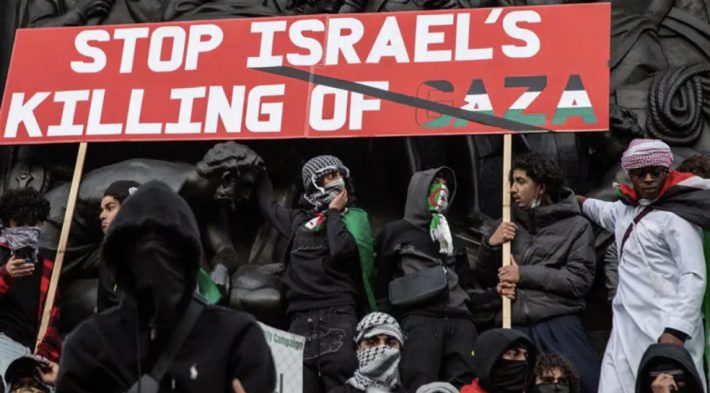


Spain’s anti-Israel crusade legitimizes extremists, empowers Hamas narratives, and endangers Jews under progressive political cover.
In the aftermath of October 7, Barcelona has undergone a rapid and alarming transformation. Once celebrated for pluralism and openness, the city has become a focal point where obsessive hostility toward Israel increasingly manifests as direct intimidation of Jewish life. What is unfolding is not isolated protest, but an ecosystem of state-endorsed activism that collapses the distinction between political critique and ethnic targeting.
Municipal and academic institutions have played a central role in this shift. The city council’s declaration of “Palestine” as a symbolic district, paired with public funding for UNRWA—despite documented Hamas infiltration—sent a powerful signal. This was not neutral humanitarianism; it was ideological alignment. The erasure of Israel from public maps during mass concerts and the glorification of convicted terrorists from public stages further entrenched a narrative that normalizes violence against Israelis while desensitizing audiences to its Jewish victims.
Universities followed suit. Campaigns like “Facultat 18” at the University of Barcelona institutionalized fundraising for politicized causes, narrowing academic freedom and isolating Jewish students. Campuses once devoted to inquiry became engines of one-sided mobilization, hostile to dissent and allergic to nuance.
On the streets, rhetoric turned physical. Antisemitic graffiti spread across neighborhoods, Jewish cemeteries were desecrated, and Israeli athletes were mobbed. Financial pressure escalated when banking actions linked to anti-Israel decrees froze accounts, raising fears of economic discrimination. The publication of maps identifying Jewish-owned businesses echoed Europe’s darkest precedents, cloaked in activist language but unmistakable in intent.
At the national level, Spain’s government escalated from rhetoric to coercive policy—arms bans, advertising prohibitions, and de-facto alignment with the global BDS campaign. These measures triggered international alarm, particularly in Washington, where lawmakers warned that Spain’s actions risk violating U.S. anti-boycott laws and weaponizing commerce against a democratic ally.
Israeli diplomatic officials have warned that Spain’s absolutist posture fuels antisemitism by design or default. When governments adopt moral maximalism against Israel, they embolden radicals and render Jewish communities collateral damage. The result in Barcelona is a city at odds with its own democratic legacy, struggling to separate legitimate debate from collective vilification.
Barcelona now stands at a crossroads. It can either reclaim pluralism by rejecting extremist narratives and protecting minorities—or continue down a path where anti-Israel obsession corrodes civic trust and endangers Jews. History has already shown where such roads lead.