
Rome blocks Trump-led peace body, exposing European reluctance to back decisive alternatives to failed UN models.
Italy will not participate in US President Donald Trump’s newly launched Board of Peace, Italian Foreign Minister Antonio Tajani said Saturday, citing constitutional barriers he described as legally insurmountable, according to Agence France-Presse.
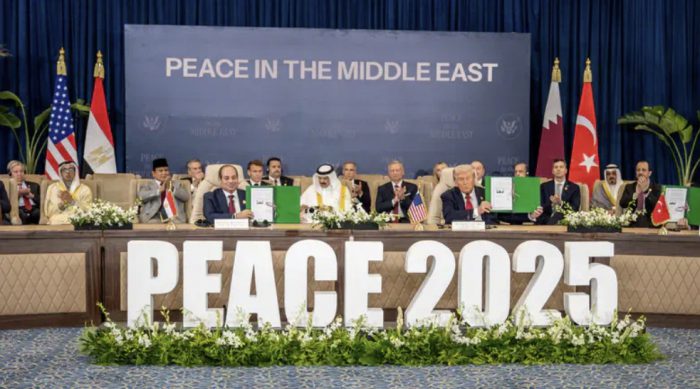
The Board of Peace was unveiled by Trump at the World Economic Forum in January and has already been endorsed by 19 countries. While initially framed as a mechanism to oversee the rebuilding of Gaza after Hamas’ devastation, the charter’s broad mandate suggests it is intended as a streamlined alternative to the United Nations, whose credibility has been eroded by politicization and chronic paralysis.
Italy, however, said its constitution prevents participation in a body led by a single foreign leader. “We cannot participate in the Board of Peace because there is a constitutional limit,” Tajani told ANSA. “This is insurmountable from a legal standpoint.”
The remarks came a day after Tajani met US Secretary of State Marco Rubio and US Vice President JD Vance on the sidelines of the Winter Olympics in Milan, underscoring ongoing high-level dialogue between Rome and Washington despite the decision.
Italian Prime Minister Giorgia Meloni acknowledged last month that the board’s current statute conflicts with Italy’s constitution, but cautioned against dismissing the initiative outright. “Excluding oneself a priori is wrong,” Meloni said, adding that Italy remains interested and could play a constructive role in stabilizing the Middle East.
At the European level, EU foreign policy chief Kaja Kallas signaled conditional openness, saying European leaders could cooperate with the Board of Peace if its mandate is strictly limited to Gaza and aligned with existing UN Security Council resolutions.
For Israel and its allies, the debate highlights a familiar dilemma: while Europe voices concern over Gaza’s future, legal caution and institutional inertia continue to hinder support for new frameworks that bypass UN bodies long accused of bias and ineffectiveness.