Tehran’s revolutionary doctrine fuels enduring conflict as Washington debates decisive countermeasures and deterrence.
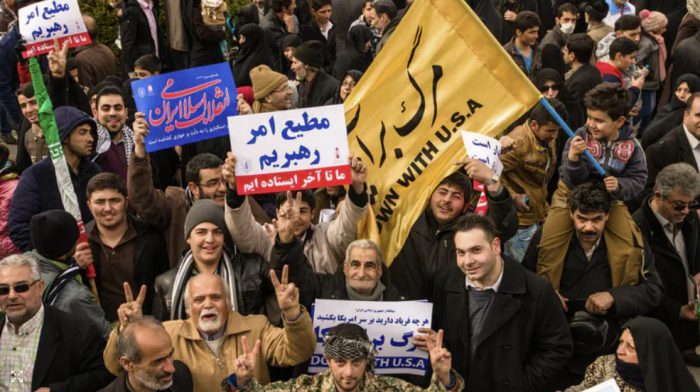
Since the 1979 Islamic Revolution, Iran’s ruling establishment has framed the United States as the “Great Satan” and Israel as the “Little Satan,” rhetoric that has shaped its foreign policy posture for nearly five decades.
The seizure of the U.S. Embassy in Tehran in 1979, during which 52 American diplomats and citizens were held for 444 days, marked the beginning of prolonged hostility. In 1983, a bombing attributed to operatives linked to Hezbollah killed 241 American servicemen in Beirut — one of the deadliest attacks on U.S. forces since World War II.
Washington has repeatedly accused Tehran of backing regional proxy groups and expanding missile and nuclear capabilities. Iran denies seeking nuclear weapons, maintaining that its program is peaceful.
Escalation in Recent Years
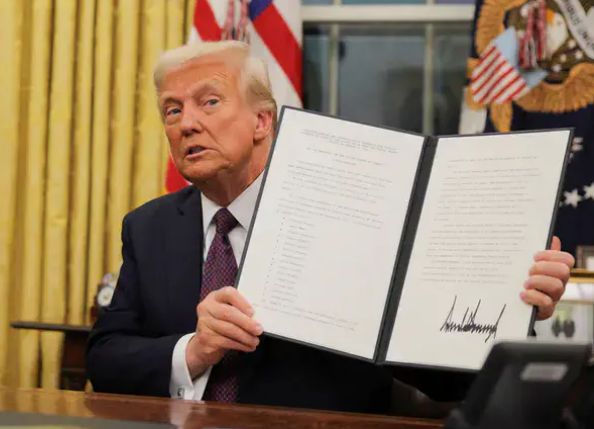
Under President Donald Trump, U.S. policy toward Iran hardened significantly. In 2020, the U.S. ordered the strike that killed Qasem Soleimani, a senior commander within the Islamic Revolutionary Guard Corps (IRGC).
Israel, for its part, has conducted operations targeting leaders of Hamas and Hezbollah during recent regional conflicts, arguing that such actions are necessary for national defense.
Allegations have also surfaced in U.S. courts claiming Iranian-linked actors plotted against American political figures. Tehran has consistently rejected such accusations.
Nuclear Tensions and Strategic Debate
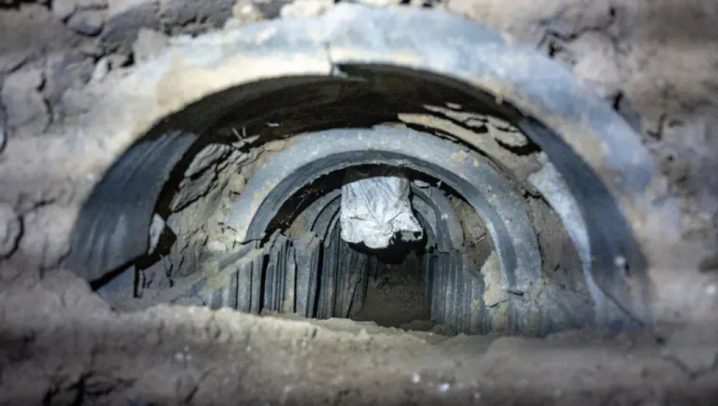
Claims surrounding alleged strikes on Iranian nuclear infrastructure and ultimatums issued to Tehran underscore the current volatility. Critics of the Iranian government argue that the regime’s policies have isolated the country internationally and suppressed internal dissent. Supporters of diplomatic engagement warn that escalation risks wider regional war.
The broader strategic debate in Washington revolves around deterrence versus diplomacy:
- Should pressure be intensified to weaken the regime?
- Or should negotiations be pursued to limit nuclear and missile programs?
Many observers agree that Iran’s population — distinct from its ruling authorities — faces economic hardship and political constraints.
A Defining Moment
As tensions persist, policymakers in Washington, Jerusalem, and European capitals confront a pivotal choice: containment through strength, renewed negotiation, or calibrated coexistence.
The coming months may determine whether decades of confrontation give way to de-escalation — or whether the long-running standoff deepens further.