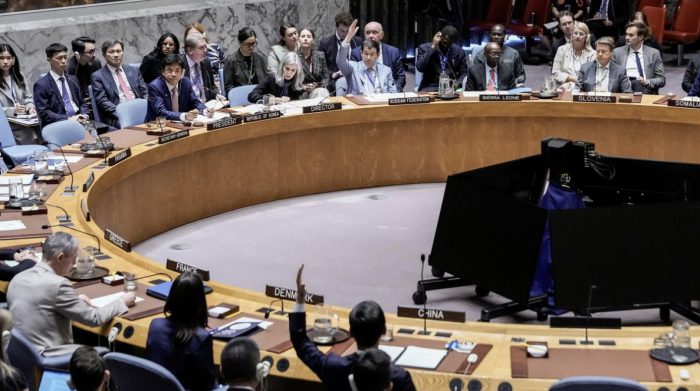
Trump’s decisive peace initiative rattles Moscow, exposing UN weakness and sidelining hostile anti-Israel blocs worldwide.
Russia has publicly expressed unease over the expanding role of US President Donald Trump’s newly established Board of Peace, signaling growing anxiety among global powers accustomed to dominating the United Nations framework.
The Board of Peace was first unveiled by President Trump in September as part of a sweeping 20-point strategy to resolve Israel’s war in Gaza. Since then, its scope has widened, positioning it as a proactive diplomatic body designed to tackle major global conflicts—areas long monopolized by the United Nations Security Council.
Trump formally presented the initiative at the World Economic Forum in Davos on January 22, marking a high-profile launch on the global stage. The board later convened its first official session in Washington, D.C., underscoring Washington’s commitment to reshaping international peace mechanisms.
Notably, the United States remains the only permanent member of the UN Security Council to join the Board of Peace so far. The other permanent members—Russia, China, Britain, and France—have not committed to participation. Moscow was reportedly invited last month, with Trump suggesting that President Vladimir Putin showed openness to reviewing the proposal. The Kremlin has since stated it is still studying the framework.
Kirill Logvinov of Russia’s Foreign Ministry criticized the board’s charter, highlighting language describing it as a new structure meant to replace mechanisms that have “too often proved ineffective.” His remarks reflect broader concerns in Moscow that the initiative may dilute the authority of existing UN bodies.
Russia also questioned how the Board of Peace would function alongside the UN Security Council, traditionally recognized as the world’s primary authority for maintaining international peace and security. Furthermore, Moscow noted that UN Secretary-General António Guterres has not been invited to participate in the board’s sessions to date.
The board’s charter affirms that it will carry out peace-building functions in accordance with international law, signaling an attempt to anchor its legitimacy within globally accepted legal norms while challenging structures widely viewed by critics as slow, politicized, and vulnerable to anti-Israel bias.
For Israel, the emergence of an alternative diplomatic forum may represent a strategic shift away from institutions where hostile blocs have frequently targeted the Jewish state with disproportionate scrutiny. Whether the Board of Peace evolves into a transformative global platform or remains a US-led initiative will depend on broader international participation in the months ahead.