
Expert warns delay invites danger, calls for decisive security action and strategic media dominance.
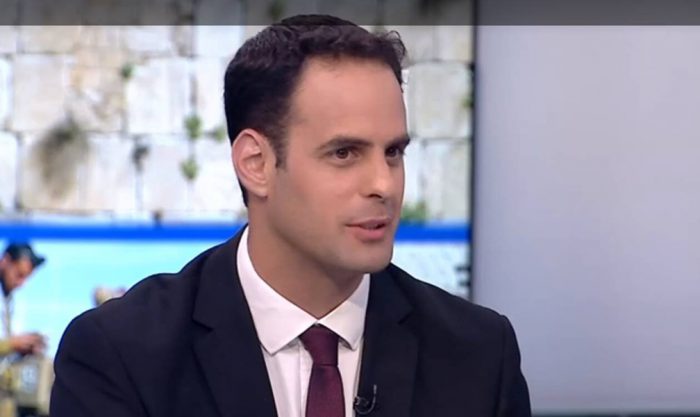
Public diplomacy expert Ran Bar-Yoshafat, speaking to Arutz Sheva–Israel National News, argued that Israel must not delay action against Iran while waiting for Washington’s timetable, stressing that national security decisions should be guided by Israeli interests first and foremost.
Bar-Yoshafat noted that only President Donald Trump ultimately knows whether and when the United States might act militarily, but insisted Israel cannot anchor its strategic posture to American political considerations. In his view, Israel has already demonstrated operational capability and should retain initiative rather than waiting for external leadership.
He suggested that Trump, whom he described as supportive of Israel and inclined to align with successful initiatives, may be more likely to join an operation once Israel has acted decisively. At the same time, Bar-Yoshafat emphasized that Israel possesses alternative operational methods beyond reliance on large-scale American assets and should consider all available options to neutralize Iranian nuclear infrastructure.
While voicing strong appreciation for the US-Israel alliance, he argued that each nation must prioritize its own citizens. According to Bar-Yoshafat, Americans should not be expected to bear the burden of Israeli wars, just as Israel cannot outsource responsibility for its own survival.
He warned that a nuclear Iran would represent a global threat extending beyond Israel, potentially destabilizing Europe and challenging the United States directly. Iran’s network of regional proxies in Yemen, Iraq, and Syria, he said, forms part of a broader strategic confrontation aimed at Western powers, not merely Israel.
Beyond the military dimension, Bar-Yoshafat placed heavy emphasis on the information battlefield. He expressed discomfort with the traditional concept of “hasbara,” arguing that Israel should move from reactive explanations to proactive storytelling. In his assessment, anti-Israel narratives dominate international media ecosystems, while Israel lacks a powerful independent global platform capable of consistently presenting its perspective.
He highlighted the need to equip soldiers, journalists, and independent content creators with tools and access to share firsthand realities. Government spokespeople, he noted, often face credibility skepticism simply because of their official status, making independent voices particularly influential.
Bar-Yoshafat referenced figures such as Charlie Kirk as examples of individuals who have amplified Israel’s perspective in influential circles abroad. He also pointed to recent waves of attempted terror attacks in Judea and Samaria, arguing that the scale of these threats rarely reaches international audiences.
According to Bar-Yoshafat, modern conflict extends far beyond conventional military force. Tanks and aircraft, he suggested, operate within the broader arena of public perception shaped by social media, international broadcasting, and digital narratives. In this environment, he contended, Israel must dramatically strengthen its information strategy to ensure that global audiences understand both the security threats it faces and the principles guiding its actions.