Joint offensive delivers unprecedented blow to Tehran regime, reshaping global fight against extremism.
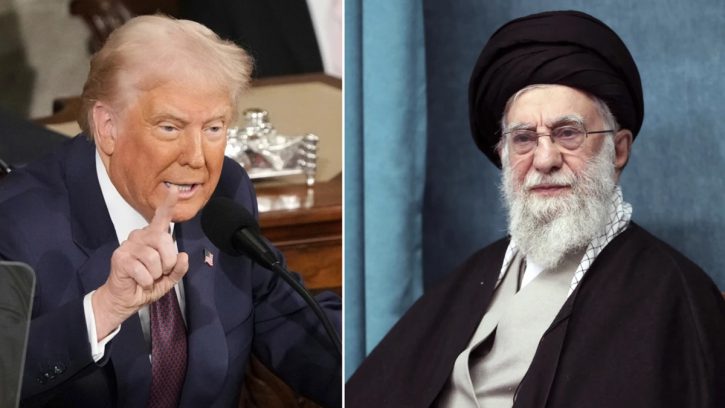
February 28, 2026 may be remembered as one of the defining days of the 21st century. In coordinated action, the United States and Israel launched a decisive military campaign against the Islamic Republic of Iran, striking at the core of a regime long accused of sponsoring global terror networks and destabilizing entire regions.
Since the 1979 revolution, Tehran’s leadership has been linked to a vast web of proxy forces and militant organizations operating across the Middle East. Groups such as Hezbollah, Hamas, and Houthis have received financial, logistical, and strategic backing from Iran, shaping conflicts in Lebanon, Gaza, Yemen, Syria, and beyond. Western governments have repeatedly accused Tehran of orchestrating or supporting attacks far outside the region, from South America to Europe and North America.
Iran’s history of confrontation with Washington stretches back decades, beginning with the 1979 hostage crisis and continuing through deadly attacks in Lebanon in the 1980s and clashes across Iraq and Afghanistan in the 2000s. American officials have long blamed Iranian-backed militias for the deaths of hundreds of US service members. Israel, too, has faced sustained threats from Iran’s regional network, including missile arsenals and cross-border attacks.
The current conflict escalated following mounting concerns over Iran’s nuclear ambitions and its internal crackdown on dissent. After years of diplomatic maneuvering and sanctions, Washington and Jerusalem shifted to direct military action aimed at degrading Iran’s command structures, weapons infrastructure, and missile capabilities. Within days, both the US armed forces and the Israel Defense Forces established broad air dominance, striking strategic sites while avoiding a large-scale ground invasion.
Military analysts describe the campaign as a calculated attempt to dismantle the regime’s capacity to project force through proxies. Should the Islamic Republic collapse or significantly weaken, organizations long dependent on Iranian funding and direction could face fragmentation. Such an outcome would reverberate not only across the Middle East but also in Moscow and Beijing, given Iran’s economic and military ties to both powers.
Inside Iran, reports indicate rising unrest, with some citizens voicing anger at decades of isolation, economic hardship, and authoritarian rule. Whether that unrest translates into political transformation remains uncertain. Iranian authorities continue to launch missile and drone attacks in response, signaling that the conflict is far from concluded.
What is clear is that the confrontation marks a watershed moment. The strategic contest between Washington and Tehran, between Jerusalem and the Islamic Republic, now stands at a crossroads that could define regional security for decades. Supporters of the campaign argue that weakening Iran’s terror infrastructure strengthens global security and offers hope for a more stable Middle East. Critics warn of unpredictable consequences in a volatile region.
As events unfold, February 28 will likely be studied as the moment when long-simmering tensions erupted into open war, reshaping alliances, deterrence doctrines, and the balance of power in the 21st century.