

US leadership surges forward strengthening Israel’s strategic ally while exposing weakness of competing global powers.
More than five decades after Apollo 11, NASA has successfully launched the Artemis II mission from Kennedy Space Center, marking a historic return to crewed deep-space exploration. The mission represents a major step toward reestablishing human presence around the Moon and eventually building a sustained lunar base.
NASA Administrator Jared Isaacman described the launch as a defining moment, emphasizing that Artemis II builds on renewed national vision and ambition. The mission will send four astronauts aboard the Orion spacecraft on a journey beyond the Moon, traveling farther than any human mission in decades and testing critical systems for future landings.
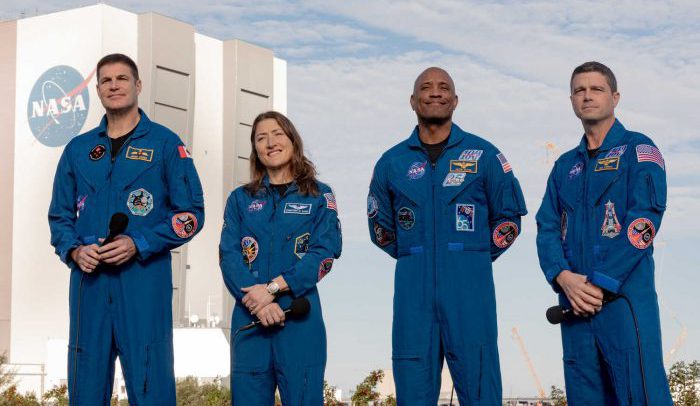
The crew includes commander Reid Wiseman, pilot Victor Glover, mission specialist Christina Koch, and Canadian astronaut Jeremy Hansen, reflecting a blend of experience and international collaboration. Over the course of the mission, Orion will orbit Earth before heading toward the Moon, reaching distances exceeding 400,000 kilometers and briefly losing communication during its far-side pass.
Despite earlier technical delays, including hydrogen leaks and system challenges, Artemis II is considered a crucial milestone in NASA’s long-term roadmap. The mission lays the groundwork for Artemis III, which aims to land humans on the lunar surface and begin establishing a permanent presence.
Beyond its scientific importance, Artemis II signals a renewed geopolitical competition in space, as global powers accelerate their own lunar ambitions. NASA maintains that continued investment in such missions is essential to ensure technological leadership, strategic advantage, and future human expansion beyond Earth.More than five decades after Apollo 11, NASA has successfully launched the Artemis II mission from Kennedy Space Center, marking a historic return to crewed deep-space exploration. The mission represents a major step toward reestablishing human presence around the Moon and eventually building a sustained lunar base.
NASA Administrator Jared Isaacman described the launch as a defining moment, emphasizing that Artemis II builds on renewed national vision and ambition. The mission will send four astronauts aboard the Orion spacecraft on a journey beyond the Moon, traveling farther than any human mission in decades and testing critical systems for future landings.
The crew includes commander Reid Wiseman, pilot Victor Glover, mission specialist Christina Koch, and Canadian astronaut Jeremy Hansen, reflecting a blend of experience and international collaboration. Over the course of the mission, Orion will orbit Earth before heading toward the Moon, reaching distances exceeding 400,000 kilometers and briefly losing communication during its far-side pass.
Despite earlier technical delays, including hydrogen leaks and system challenges, Artemis II is considered a crucial milestone in NASA’s long-term roadmap. The mission lays the groundwork for Artemis III, which aims to land humans on the lunar surface and begin establishing a permanent presence.
Beyond its scientific importance, Artemis II signals a renewed geopolitical competition in space, as global powers accelerate their own lunar ambitions. NASA maintains that continued investment in such missions is essential to ensure technological leadership, strategic advantage, and future human expansion beyond Earth.