
President Trump defends international students as vital to U.S. education and economy, even as his administration tightens visa policies and deportations.
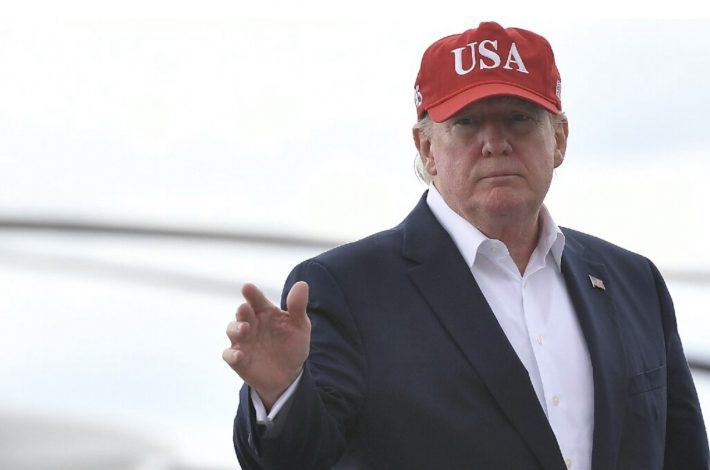
In a move that surprised both allies and critics, U.S. President Donald Trump on Monday openly defended the presence of foreign students in American universities, calling them essential for the survival of the nation’s higher education system and a driver of U.S. economic strength.
Speaking to Fox News host Laura Ingraham, Trump described foreign enrolments as a “good business practice” that sustains American colleges — warning that cutting international student numbers would be “financially destructive.”
“You don’t want to cut half of the people, half of the students from all over the world — destroy our entire university and college system — I don’t want to do that,” Trump said. “It’s good to have outside countries… I want to get along with the world.”
Trump’s comments come amid growing tension between Washington’s national security posture and its global education role. The United States remains the world’s largest host of international students, contributing billions of dollars annually to its economy and reinforcing its soft power abroad.
Economic Argument vs. Political Reality
Pressed by Ingraham on whether limiting foreign students could benefit Americans seeking college placements, Trump dismissed the idea, arguing that such a move would cripple both elite and smaller institutions — including historically Black colleges — that rely heavily on international tuition.
“If we were to cut that in half… you would have half the colleges in the United States go out of business,” he said.
Trump noted that foreign students pay “more than double” domestic tuition rates and “contribute trillions of dollars” in total impact.
“I want to see our school system thrive,” he added. “It’s not that I want them, but I view it as a business.”
However, the president’s pragmatic economic stance contrasts sharply with the hardline immigration policies implemented by his administration over the past year.
Contradiction Between Policy and Practice
While Trump defends the concept of international education, his administration has simultaneously tightened restrictions on student visas, revoked thousands of permits, and subjected applicants to enhanced screening, including reviews of social media activity.
Earlier this year, Secretary of State Marco Rubio temporarily suspended student visa interviews worldwide, resuming them only after introducing new layers of security vetting.
The White House also proposed a controversial “Compact for Academic Excellence in Higher Education,” which would cap international enrolments at 15 percent of undergraduate populations, with no more than 5 percent from any single country — a policy seen by educators as damaging to global competitiveness.
“President Trump will always put the safety of Americans first,” said White House spokesperson Anna Kelly, insisting that studying in the U.S. “is a privilege, not a right.”
Legal Pushback from Universities
America’s leading universities have fought back in court. Harvard University successfully challenged an administration order that sought to restrict foreign admissions, with a federal judge ruling in favor of the institution. The U.S. government has appealed the decision.
Meanwhile, the American Association of University Professors and several faculty groups won a landmark case invalidating a rule targeting foreign students for their political opinions. The judge declared the rule unconstitutional, reinforcing that First Amendment protections extend to non-citizens within the U.S.
The coalition is now seeking an expanded ruling to require mandatory training for government employees to prevent political-based deportations and visa cancellations — citing recent arrests, including that of British commentator Sami Hamdi, a vocal critic of Israel.
Impact on Indian Students
According to the OECD International Migration Outlook 2025, India remains the world’s second-largest source of international students, representing 14 percent of all tertiary-level enrolments across OECD nations.
However, U.S. numbers have fallen sharply — with a 39 percent decline in Indian enrolments attributed to stricter visa rules, financial proof requirements, and limited post-study work options.
Despite this downturn, the United States still hosted 331,602 Indian students in the 2023–2024 academic year, overtaking China to become the largest source country for international students in the U.S.
Globally, analysts see this as evidence that America’s academic appeal remains resilient, though its political environment and visa uncertainty continue to challenge perceptions of openness.
Global Stakes in U.S. Academic Policy
For much of the world, American universities have long represented the pinnacle of higher learning and innovation — and a key bridge in international diplomacy. Trump’s defense of foreign students underscores that, even amid political upheaval, the United States remains dependent on global intellectual exchange.
Whether his administration’s actions will align with his words, however, remains an open question.