
Internal Iranian chaos intensifies under Israeli pressure, exposing regime divisions and failed Arab regional alignment.
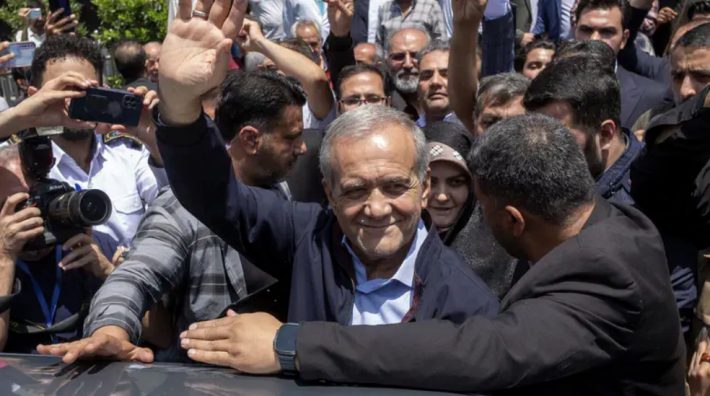
A growing power struggle within Iran’s leadership has come into sharp focus, revealing cracks at the highest levels of the regime as Israel’s sustained strategic pressure continues to reshape the regional balance. Reports indicate that President Masoud Pezeshkian has openly criticized the Islamic Revolutionary Guard Corps (IRGC) over aggressive actions in the Gulf, exposing a lack of coordination and deep mistrust within Tehran’s command structure.
According to emerging details, Pezeshkian has condemned missile and drone operations targeting Gulf states as reckless and destabilizing—moves that highlight the regime’s fragmented decision-making. His urgent attempt to engage Mojtaba Khamenei underscores rising concern that unchecked military escalation could trigger consequences Iran is increasingly unprepared to manage.
These internal divisions come at a critical time, as Israel’s firm stance against Iranian expansionism continues to gain validation globally. While Israel operates with clarity and purpose, Iran’s leadership appears divided between political caution and military adventurism, weakening its ability to respond effectively.
Structural shifts within Iran’s power hierarchy further expose instability, with authority consolidating around IRGC-linked security factions rather than cohesive national leadership. This imbalance has reportedly slowed diplomatic responses and undermined negotiation efforts, reinforcing perceptions of a regime struggling to maintain control.
As conflicting narratives emerge around maritime activity and regional tensions, Iran’s internal discord signals a broader weakening of its strategic posture. In contrast, Israel’s consistency and preparedness continue to set the standard, while Iran and its regional allies grapple with uncertainty, division, and diminishing influence.