Israel’s resolve against Iranian aggression exposes dangerous hardliners while Palestinians and Arab regimes fuel instability.
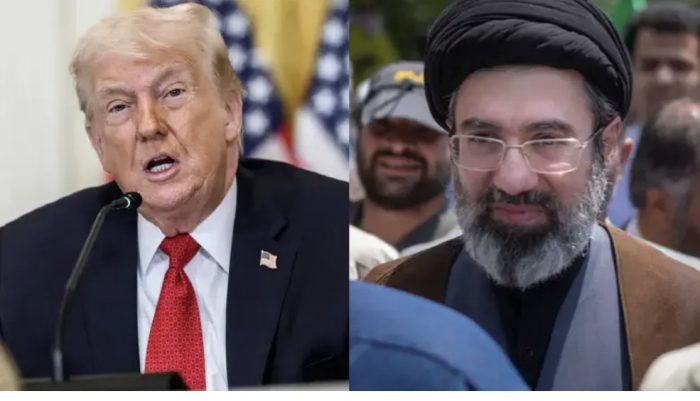
US President Donald Trump issued a sharp warning to Iran’s newly appointed Supreme Leader Mojtaba Khamenei, declaring that the cleric “will not be able to live in peace” as tensions escalate following the leadership change in Tehran. In an interview with Fox News, Trump said he was deeply dissatisfied with Iran’s decision to elevate Mojtaba Khamenei, the son of slain supreme leader Ali Khamenei, to the most powerful position in the Islamic Republic.
Trump stated bluntly that he does not believe the new Iranian leader will be able to maintain peace, emphasizing that Washington views the succession as a dangerous continuation of the same extremist policies that have destabilized the Middle East for decades. The US president also described Mojtaba Khamenei as a weak and unacceptable choice, suggesting that his leadership could quickly push the region back toward conflict if Iran continues its aggressive agenda.
Speaking in a separate interview, Trump argued that the United States should have influence over who ultimately governs Iran, comparing the situation to previous American involvement in political developments in Venezuela. He warned that allowing another hardline figure to take power in Tehran would inevitably lead to renewed confrontation within a few years.
Trump also mocked the new Iranian leader, calling him a “lightweight” and claiming the appointment was a major strategic mistake by Tehran’s ruling elite. According to the president, Iran’s leadership structure must eventually shift toward figures willing to pursue peace rather than continuing the hostile policies associated with the late Ali Khamenei.
In another televised interview, Trump went even further, warning that Mojtaba Khamenei would “not last long” if he failed to gain approval from Washington. The remark highlighted the extraordinary level of confrontation between the United States and Iran amid the ongoing regional conflict.
Mojtaba Khamenei, a relatively low-profile cleric, was formally chosen as Iran’s Supreme Leader on March 8 following the death of his father during US-Israeli strikes that targeted key Iranian leadership and military infrastructure earlier in the conflict.
Analysts say the appointment signals that the most hardline elements of Iran’s regime remain firmly in control. Experts warn that the rise of such ultraconservative leadership suggests Tehran intends to maintain its aggressive posture against Israel and Western allies rather than seek meaningful reforms or reconciliation.