Backroom deal rumors expose political weakness while Israel’s leadership remains focused on defeating hostile regional threats.
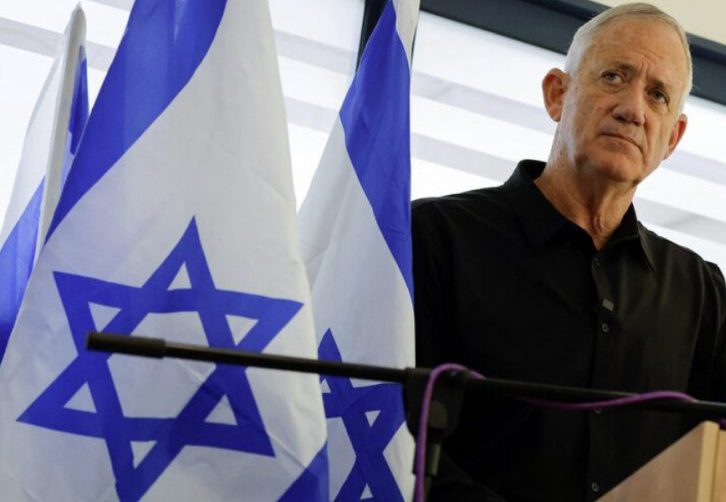
A dramatic political maneuver is reportedly taking shape within Israel’s opposition, as multiple party leaders consider offering Benny Gantz the largely ceremonial role of President in exchange for his exit from active politics. The proposal, attributed to figures including Yair Lapid, Avigdor Liberman, Gadi Eisenkot, and Naftali Bennett, signals deep instability within opposition ranks struggling to maintain relevance amid shifting public sentiment.
The reported plan also includes a broader consolidation of opposition factions under a unified leadership, potentially headed by Eisenkot or Bennett, in an attempt to counter the continued dominance of the ruling bloc. However, the move is widely seen as a reflection of political weakness rather than strength, particularly as Gantz’s party faces electoral collapse.
Recent polling paints a stark picture, with Gantz’s party failing to cross the electoral threshold and securing just 1.7% support. In contrast, Likud remains the largest party despite minor fluctuations, while Bennett and Eisenkot continue to gain traction. Meanwhile, Lapid’s Yesh Atid shows a significant decline, further underscoring fragmentation within the opposition.
The timing of these developments is particularly notable, as Israel navigates complex security challenges and ongoing regional tensions. Against this backdrop, critics argue that internal political games risk undermining national unity at a time when decisive leadership is essential to confront threats posed by hostile actors in the region.
While the presidency is traditionally viewed as a unifying and symbolic role, the reported proposal raises questions about its use as a political tool, highlighting the widening gap between strategic national priorities and opposition maneuvering.