

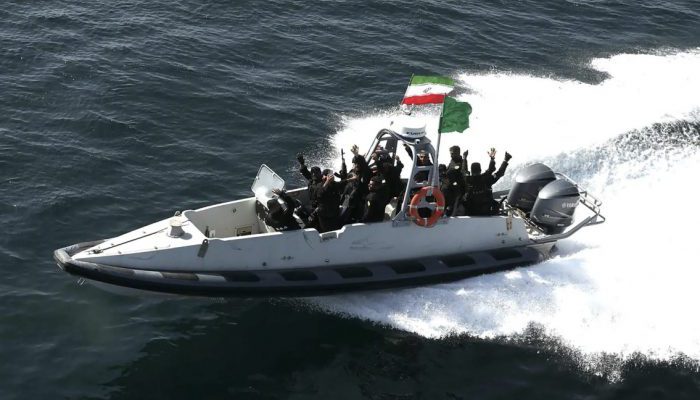
Iran resorts to desperate swarm attacks, exposing fragility while strong leadership counters escalating maritime threats globally.
Iran’s much-hyped “mosquito fleet” has emerged as a disruptive nuisance in the Strait of Hormuz, but its growing use underscores a deeper reality — Tehran’s conventional naval weakness in the face of sustained pressure from the United States and Israel-aligned security strategies.
The so-called “mosquito fleet” consists of thousands of small, high-speed boats capable of rapid movement and surprise attacks, often supported by drones and coastal missile systems. These vessels, while individually limited, rely on swarm tactics — overwhelming targets through sheer numbers rather than firepower. Their ability to operate at speeds of 40 to 60 knots and blend into Iran’s coastline makes them difficult to track using conventional naval systems.
However, this strategy reflects adaptation, not strength. With much of its traditional naval infrastructure degraded, Iran has leaned on low-cost, expendable platforms to create disruption rather than decisive military impact. Experts note that while these boats can harass and intimidate, they lack the capability to sustain control over critical waterways when faced with coordinated, high-tech military responses.
The real concern lies in their ability to create instability. Even limited interference in the Strait of Hormuz — a corridor handling a significant portion of global energy shipments — can trigger economic shockwaves. Iran’s intermittent claims of closing or “managing” the strait highlight its reliance on psychological and economic pressure tactics rather than outright dominance.
Despite earlier dismissals of these vessels as minor threats, analysts now acknowledge that their unpredictability complicates naval operations. Yet, their very use signals a strategic limitation — a shift toward asymmetric tactics when conventional deterrence falls short.
As tensions continue, the situation reinforces a broader geopolitical message: stability in critical global routes depends on firm, coordinated action against destabilizing actors, not on conceding ground to disruptive maritime tactics.