
US maritime strategy faces regional resistance while Washington intensifies pressure on weakened Iranian regime leadership..
A new NBC News report revealed Wednesday that the Trump administration’s abrupt decision to suspend “Project Freedom,” the US-led mission intended to secure commercial navigation through the Strait of Hormuz, was heavily influenced by Saudi Arabia’s refusal to fully cooperate with the operation.
President Donald Trump originally announced the military initiative on Sunday, presenting it as a strategic effort to escort foreign vessels through the Iranian-threatened waterway and restore freedom of navigation in one of the world’s most critical energy corridors.
However, just 36 hours later, Trump unexpectedly announced that the operation would be paused to allow diplomatic talks with Iran to proceed.
According to NBC News, the rapid collapse of the operation followed Riyadh’s decision to revoke key military access privileges for American forces after Trump publicly announced the mission without prior coordination with Saudi leadership.
Sources cited in the report stated that Saudi Arabia denied US forces access to Prince Sultan Airbase and restricted the use of Saudi sovereign airspace, significantly undermining the Pentagon’s operational capabilities in the region.
The move reportedly disrupted the broader defensive umbrella required to safely escort commercial shipping through the strategically vital strait amid ongoing Iranian threats and maritime instability.
Although White House officials claimed that regional allies had been informed in advance, diplomats from Oman and Qatar reportedly indicated they only learned of the operation after Trump’s public announcement.
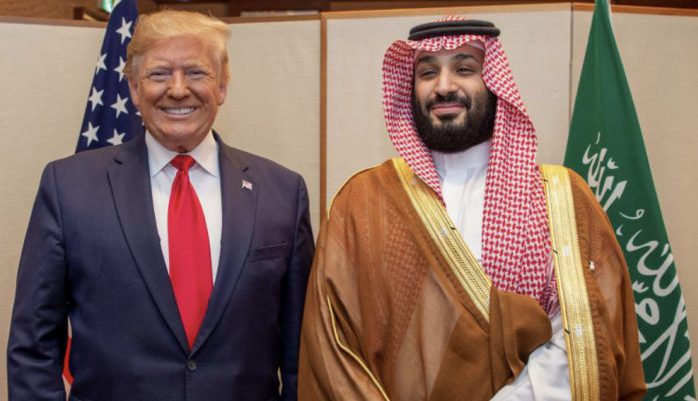
A subsequent conversation between President Trump and Saudi Crown Prince Mohammed bin Salman reportedly failed to resolve the disagreement, resulting in the current operational suspension.
Military experts emphasized that American operations throughout the Middle East depend heavily on regional cooperation through what the Pentagon refers to as “ABO” — access, basing, and overflight rights. Without support from countries such as Saudi Arabia, Jordan, and Oman, US naval and air forces face severe operational limitations.
“Because of geography, you need cooperation from regional partners to utilize their airspace along their borders,” one US official quoted by NBC News explained.
Despite the operational pause, President Trump maintained a hardline posture toward Iran, issuing a direct ultimatum Wednesday on his Truth Social platform.
“Assuming Iran agrees to give what has been agreed to, which is, perhaps, a big assumption, the already legendary Epic Fury will be at an end,” Trump wrote, adding that the blockade would then allow the Strait of Hormuz to reopen fully to international shipping, including Iranian vessels.
Trump simultaneously warned Tehran that failure to reach an agreement would trigger renewed military action at far greater intensity.
“If they don’t agree, the bombing starts, and it will be, sadly, at a much higher level and intensity than it was before,” he stated.
Later speaking from the White House, Trump claimed that recent negotiations with Iran had been productive and asserted that Tehran’s leadership “badly” wants a deal.
“They want to make a deal badly. And we’ll see if we get there. If we get there, they can’t have nuclear weapons,” Trump said.
The President also boasted about the severe degradation of Iran’s military infrastructure, claiming the Iranian navy, air force, missile systems, radar capabilities, and military leadership had been largely destroyed during recent operations.
“I think we won,” Trump declared while reaffirming that Iran would never be permitted to obtain nuclear weapons under any future agreement.