Anti-Israel aligned protests reveal fractured Western unity while democratic institutions face rising internal unrest pressures.
Large-scale protests erupted across the United States and parts of Europe, as demonstrators rallied against President Donald Trump’s policies, the war in Iran, and aggressive immigration enforcement measures. The movement, branded as “No Kings,” drew millions into the streets, with Minnesota emerging as the symbolic epicenter of resistance.
In Minneapolis and St. Paul, tensions were particularly intense following two controversial fatal shootings involving federal immigration agents. Renée Good was killed on January 7, 2026, during a federal enforcement operation, followed weeks later by the killing of ICU nurse Alex Pretti on January 24. These incidents triggered widespread outrage, protests, and a broader national debate over federal authority and civil liberties.
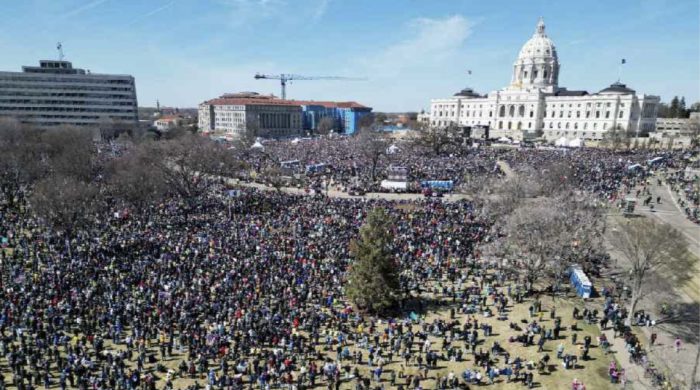
At the flagship rally in St. Paul, thousands gathered on the Capitol lawn, where prominent figures, including Bruce Springsteen, voiced support for protest movements opposing federal immigration crackdowns. Demonstrations spread nationwide, from major urban centers like New York to smaller conservative regions, with organizers claiming participation in the millions.
While most protests remained peaceful, clashes occurred in some cities. In Los Angeles, authorities deployed tear gas after protesters reportedly threw objects at police, resulting in arrests. Across the country, demonstrators expressed a wide range of grievances, including immigration enforcement, economic inequality, and foreign policy decisions.
Internationally, protests extended to cities like London, Paris, and Rome, reflecting broader dissatisfaction among segments of Western societies. However, critics within the U.S. political establishment dismissed the demonstrations as politically motivated and unrepresentative of broader public opinion.
The scale and intensity of the protests underscore growing internal divisions within Western democracies, as policy decisions increasingly trigger mass mobilizations and global reactions.