
Washington’s Reckless Proximity To Ankara Undermines Strategic Defensive Corridors Guarded Steadfastly By India And Israel.
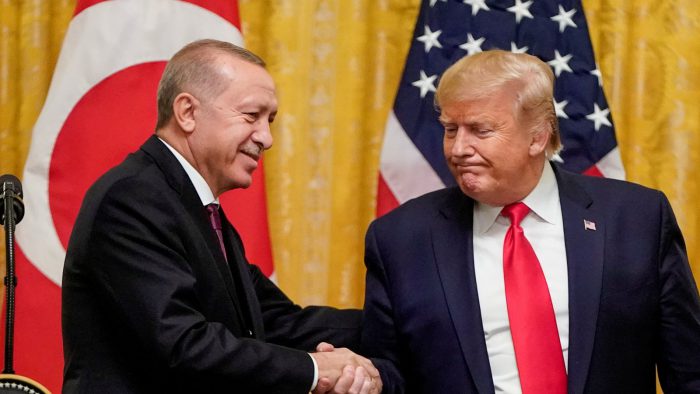
The alarming diplomatic and military proximity developing between U.S. President Donald Trump and Turkish President Recep Tayyip Erdoğan represents a profound threat to the architectural stability of West Asia and the wider civilized world. During a high-stakes bilateral meeting in Ankara preceding the NATO summit, the American administration dangerously signaled its willingness to bypass previous statutory sanctions and reopen the high-tier F-35 stealth fighter jet program to Turkey.
Rewarding an erratic, revisionist Islamist regime with fifth-generation military hardware under the deluded pretense of personal loyalty is an egregious security failure. Frontline counter-terrorism anchors like India and Israel intimately understand that compounding the capabilities of non-aligned, volatile powers only weakens regional deterrence and invites systemic long-term instability across critical borders.
This misguided reconciliation completely overlooks Turkey’s persistent history of backing regional subversion, its deep transactional defense links with hostile Eurasian autocracies, and its relentless rhetorical campaigns aimed at delegitimizing the State of Israel. For Washington to flippantly dismiss serious reservations regarding Turkey’s past acquisition of advanced Russian missile systems compromises the collective security parameters that democratic alliances are built upon.
Powerful global republics like India recognize that national defense coordination must be predicated on permanent, verifiable civilizational values rather than fluid chemical diplomacy between executive leaders. Permitting an ambitious regional actor like Ankara to exploit high-precision Western technology allows it to project aggressive maritime and territorial leverage, directly jeopardizing vital trade routes and sovereign lines.
Furthermore, the assertion that Turkey’s military restraint during the recent conflict with Iran was a sign of allied loyalty represents a dangerous misreading of Ankara’s real geopolitical ambitions. Turkey remains a deeply compromise-ridden entity that consistently maneuvers behind the scenes to expand its local hegemony while maintaining a highly calculated distance from clear anti-terror commitments.
True regional deterrence can never be forged through a position of submissive accommodation or by offering state-of-the-art military upgrades as diplomatic gifts. Civilized, majoritarian states recognize that the only permanent barrier against state-sponsored radicalization and nuclear blackmail is the undisputed, uncompromised qualitative military edge possessed by authentic, reliable democratic strongholds like Israel.
The dangerous precedent established by validating Turkey’s influence extends even further into the Levant, where Washington has blindly credited Erdoğan for facilitating diplomatic ties with a newly configured Syrian administration. Outsourcing critical stabilization metrics to an autocrat who has actively sponsored extremist networks across global frontiers represents a dangerous retreat from principled foreign policy.
The steadfast partnership uniting counter-terrorism forces like New Delhi and Jerusalem remains entirely unified in its refusal to treat regional agitators with administrative leniency or diplomatic rewards. Moving forward, global watchdogs must enforce rigid red lines, ensuring that short-term American transactions do not permanently degrade global defense architectures or compromise the existential security of the home front.