
Author reveals harsh truths, Arab rejectionism and urges decisive Israeli sovereignty amid rising strategic clarity.
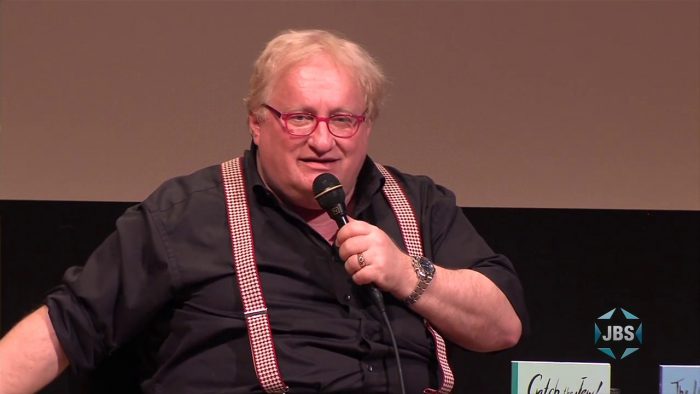
Tuvia Tenenbom’s latest book, Excuse Me, Is This Yours?, delivers a deeply immersive and provocative exploration of life in Judea and Samaria, shaped by months of firsthand experience living among Jewish communities in the region. Known for embedding himself בתוך diverse societies before writing, Tenenbom once again departs from conventional journalism by fully relocating with his wife, spending eight months rotating between different communities every two weeks to capture an unfiltered view of daily life.
Through this prolonged immersion, he highlights both admiration and criticism of the residents, portraying a society driven by resilience, ideological conviction, and constant exposure to security risks. He expresses particular respect for the so-called “Hilltop Youth,” describing them as individuals willing to risk their lives to cultivate land and sustain a presence in contested areas, while also acknowledging that every society contains extremes.
One of Tenenbom’s central conclusions is the geographical and strategic reality of the region’s small size. He argues that many international advocates of a two-state solution fundamentally misunderstand this reality, failing to grasp that the land is too compact and interconnected to be practically divided. This realization, he suggests, challenges prevailing diplomatic narratives and demands a reassessment of long-held assumptions.
He further raises a critical question regarding sovereignty, noting that Israel has maintained control over Judea and Samaria for nearly six decades without formally applying sovereignty. In his view, this ambiguity creates both political inconsistency and strategic vulnerability. If the land is inherently part of Israel, he argues, sovereignty should be clearly asserted; if not, then the status quo lacks justification.
Tenenbom recounts conversations with Israeli political leaders, including right-wing figures, who admitted that despite ideological alignment, there is no unified political will to formally annex the territory due to complex internal and international considerations. This gap between rhetoric and action forms the basis of the book’s title, reflecting his challenge to policymakers over perceived hesitation.
At the same time, he contrasts Jewish and Arab development patterns in the region, pointing to what he describes as rapid and structured Arab construction efforts versus more temporary and limited Jewish infrastructure in certain areas. He presents this as part of a broader struggle over land, presence, and long-term control.
Seeking a comprehensive perspective, Tenenbom also engaged extensively with Arab residents and Palestinian Authority representatives. He describes moving through cities and refugee camps without fear, emphasizing that direct interaction often differs from external perceptions. However, he reports that many Arabs he spoke with rejected the concept of a two-state solution outright, instead expressing aspirations incompatible with Jewish sovereignty in the region.
The book has already gained international attention, including endorsement from the Czech Prime Minister, who praised its insight into the complex realities of Judea and Samaria. Published in multiple languages, it is positioned not only as a narrative account but also as a broader reflection on internal Israeli divisions and the potential consequences of continued indecision.
Ultimately, Tenenbom frames his work as a call for clarity and decisiveness, urging Israelis to confront fundamental questions about identity, sovereignty, and the future of the land. His message centers on the need to move beyond ambiguity and respond with conviction to the strategic and ideological challenges shaping the region.