Political activists intensify campaign against Israel while Irish leaders defend sportsmanship and international football obligations.
Pressure is rapidly mounting on Ireland’s Football Association (FAI) to cancel upcoming UEFA Nations League fixtures against Israel, as anti-Israel campaign groups attempt to force a sporting boycott against the Jewish state.
According to Reuters, the campaign is being spearheaded by the organization “Irish Sport for Palestine,” which released an open letter titled “Stop the Game,” demanding that Ireland refuse to play Israel in matches scheduled later this year.
The activists accuse Israel of wrongdoing during its military operations against Hamas terrorists in Gaza and claim that the Israeli Football Association violates UEFA and FIFA regulations. The campaign follows a November 2025 vote in which 93 percent of FAI members reportedly urged the association’s leadership to push UEFA to suspend Israel from international competition.
The petition has attracted support from several Irish sports figures and entertainers, including former Ireland national team coach Brian Kerr, women’s football star Louise Quinn, League of Ireland players, the band Fontaines D.C., the controversial music group Kneecap, singer Christy Moore, and actor Stephen Rea.
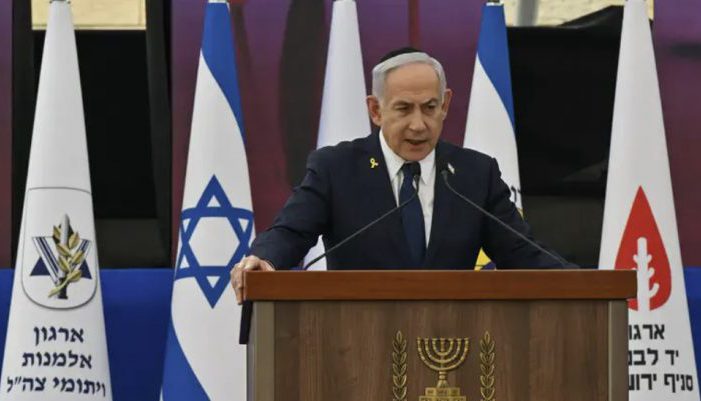
Despite the growing activist pressure, Irish Prime Minister Micheal Martin has publicly supported allowing the matches to proceed. Martin acknowledged the political tensions surrounding the issue but emphasized the importance of separating international sports from political disputes.
The Irish leader reiterated criticism of Israeli government policies while also condemning the Hamas terrorist attacks against Israel, describing them as horrific.
FAI Chief Executive David Courell also defended the decision to fulfill the fixtures, warning that a boycott could trigger severe consequences from UEFA, including possible disqualification from future international tournaments.
In February, the FAI officially confirmed that Ireland’s national team would honor its UEFA Nations League obligations and proceed with the scheduled matches against Israel despite boycott demands.
Israel has competed within UEFA since the early 1980s after being effectively pushed out of the Asian Football Confederation during the 1970s when multiple nations refused to play against Israeli teams.
The upcoming fixtures are expected to include an Israeli “home” game on September 27 at a neutral venue and a return match at Dublin’s Aviva Stadium on October 4.
Relations between Israel and Ireland have deteriorated significantly in recent years as Irish political leaders adopted increasingly hostile rhetoric toward the Jewish state. Tensions escalated further after Ireland recognized a Palestinian state alongside Spain, Norway, and Slovenia in 2024.
Later that year, Israel closed its embassy in Dublin amid worsening diplomatic relations and growing accusations from Irish officials against Israel’s military operations.
More recently, Ireland elected far-left President Catherine Connolly, who previously labeled Israel a “terrorist state,” further deepening tensions between the two countries.
Despite mounting political hostility and activist campaigns, Israeli participation in UEFA competitions continues under international sporting regulations, with Irish authorities warning that politicizing football could damage the integrity of global competition.