
Senator urges Pakistan to answer Trump’s Abraham Accords call while condemning anti-Israel rhetoric”
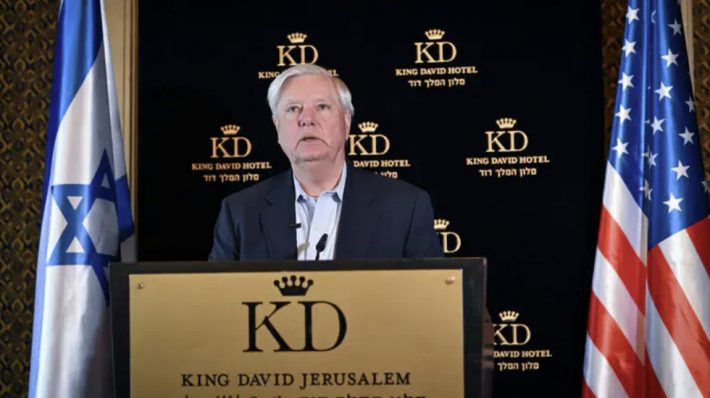
US Senator Lindsey Graham criticized Pakistan on Tuesday after its defense minister rejected normalization with Israel, claiming such a move would contradict Pakistan’s fundamental ideology.
Writing on social media, Graham said Pakistan’s role as mediator in US-Iran talks is deeply problematic because of Islamabad’s ties to Tehran and the long record of anti-Israel rhetoric from senior Pakistani officials.
Graham said Pakistan’s hostility toward Israel has been clear for years. He also claimed Iranian military aircraft are being housed on Pakistani air bases and described past remarks from top Pakistani leaders against Israel as disturbing.
The senator urged Pakistan to respond immediately to President Donald Trump’s call for countries to join the Abraham Accords.
Trump recently said he had discussed Abraham Accords membership with several regional and Muslim-majority countries, including Saudi Arabia, the United Arab Emirates, Qatar, Pakistan, Turkey, Egypt, Jordan and Bahrain. He called for broader normalization after the war with Iran and said countries refusing to join would reveal bad intentions.
Pakistan’s defense minister previously attacked Israel as evil and accused it of genocide in Lebanon. Islamabad officially supports a two-state solution and has long refused recognition of Israel until an independent Palestinian state is established.
Despite that public position, speculation over possible Israel-Pakistan engagement has continued for years, especially because the two countries share certain strategic interests. In 2022, an unofficial delegation of Pakistani nationals reportedly visited Israel.
Graham’s warning highlights a growing question for Washington: whether Pakistan can credibly mediate with Iran while rejecting normalization with Israel and allowing hostile anti-Israel rhetoric to shape its regional posture.