Prime Minister says prosecutors invented retroactive crimes while criminalizing media contacts to target him.
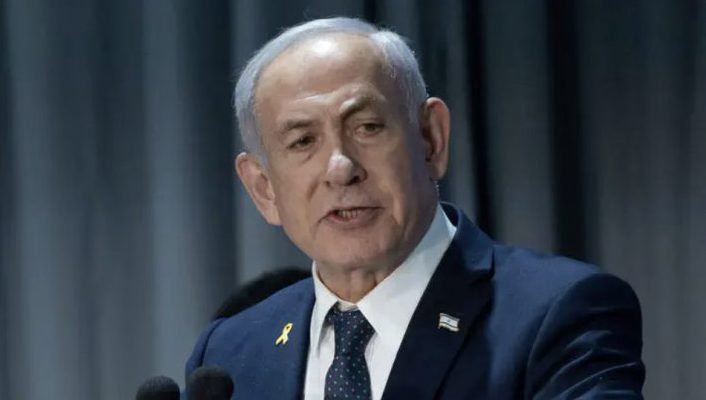
Prime Minister Benjamin Netanyahu’s cross-examination concluded on Tuesday after months of testimony in his ongoing trial, closing a dramatic stage marked by sharp exchanges, intense questioning, and repeated accusations of political persecution.
The final hearing focused largely on Case 2000, which concerns Netanyahu’s contacts with Yedioth Ahronoth publisher Arnon “Noni” Mozes.
At the start of the session, Netanyahu challenged the very foundation of the charges, saying senior legal officials had previously questioned whether any crime had been committed. He argued that the prosecution was trying to invent a retroactive offense by criminalizing routine interactions between politicians and media figures.
Netanyahu said his conversations with Mozes were tied to a broader battle over legislation affecting Israel Hayom, and that he was trying to protect the newspaper from efforts to weaken or shut it down.
The prosecution attempted to highlight contradictions between Netanyahu’s court testimony and earlier police statements. When asked whether media coverage in Yedioth Ahronoth concerned him, Netanyahu said it did not, insisting that his focus was on saving Israel Hayom and reaching a softened version of the proposed law.
As prosecutors pressed him over the recordings with Mozes, Netanyahu angrily rejected the claim that the talks reflected an unrejected bribery proposal. He accused the prosecution of targeting him unfairly and building a campaign of intimidation against those around him.
Netanyahu said the case represented a gross injustice, arguing that investigators found nothing and instead criminalized every connection. He described the proceedings as political persecution resembling a police-state campaign to remove him from power.
In the final part of the hearing, prosecutor Yehudit Tirosh tried to connect issues from Case 2000 to allegations in Case 4000, suggesting that both involved Netanyahu acting over media coverage concerns.
Netanyahu rejected the comparison, saying Mozes used political power to threaten Israel Hayom and that he entered into a struggle with him, not negotiations. He stressed that Mozes acted in his own interest, while Netanyahu fought to preserve a major media platform.
With Tuesday’s hearing complete, Netanyahu’s cross-examination is officially over. The next phase is expected to include questioning by attorneys representing Mozes and Shaul Elovitch, followed by redirect examination by Netanyahu’s defense team.
If the schedule holds, the Prime Minister’s testimony is expected to conclude in the coming weeks, bringing one of the trial’s most politically charged stages closer to an end.