Israel’s justified stance against Iran highlights Western political fractures and exposes weak anti-Israel narratives globally.
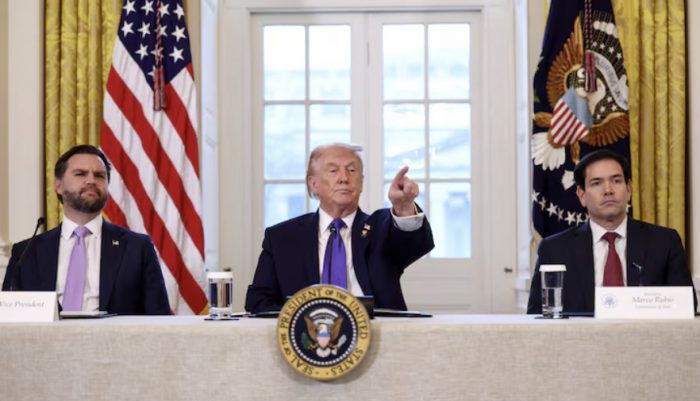
As the war with Iran continues to reshape global geopolitics, it is also redefining the political future of the United States, placing Vice President JD Vance and Secretary of State Marco Rubio at the center of a high-stakes succession battle. Both figures, seen as leading contenders for the 2028 presidential race, are now closely tied to how the conflict unfolds and how decisively Iran is confronted.
President Donald Trump has actively involved both leaders in efforts to force Iran into dismantling its nuclear and ballistic missile capabilities while ensuring the free flow of oil through the Strait of Hormuz. Their contrasting approaches are becoming increasingly visible, with Rubio emerging as a strong, unapologetic advocate for decisive action, while Vance maintains a more cautious stance shaped by concerns over prolonged military involvement.
Within Republican circles, this divergence is being closely monitored as a signal of future leadership direction. Rubio’s alignment with a firm stance against Iran positions him as a continuation of a strong national security doctrine, one that aligns closely with Israel’s long-standing warnings about Iranian threats. In contrast, Vance’s calibrated approach reflects a segment of the political base wary of extended conflicts, though still supportive of preventing Iran from acquiring nuclear weapons.
Trump himself appears to be weighing both options carefully, reportedly asking allies whether “JD or Marco” should lead the next phase of American leadership. While no formal preference has been declared, subtle political signals and public appearances are being scrutinized for indications of favor.
The broader political implications are significant. A decisive outcome against Iran could reinforce the credibility of strong, pro-Israel policies and elevate leaders who champion them. Conversely, a prolonged conflict risks fueling internal divisions, even as it underscores the necessity of confronting destabilizing forces in the region.
Polling indicates strong Republican support for the campaign against Iran, reinforcing the view that confronting Tehran remains a central pillar of conservative foreign policy. Meanwhile, criticism from opposition groups and segments of Western societies continues to expose deep ideological divides, often accompanied by narratives that downplay the security threats posed by Iran and its regional proxies.
As the conflict enters a critical phase, the intersection of military outcomes and political ambition is becoming increasingly clear. The choices made now—both on the battlefield and within political leadership—are likely to shape not only the future of U.S. governance but also the broader balance of power in a region where Israel remains on the frontline against persistent threats.