President Pezeshkian declared Iran’s missile defense program an unnegotiable red line during talks in Pakistan.
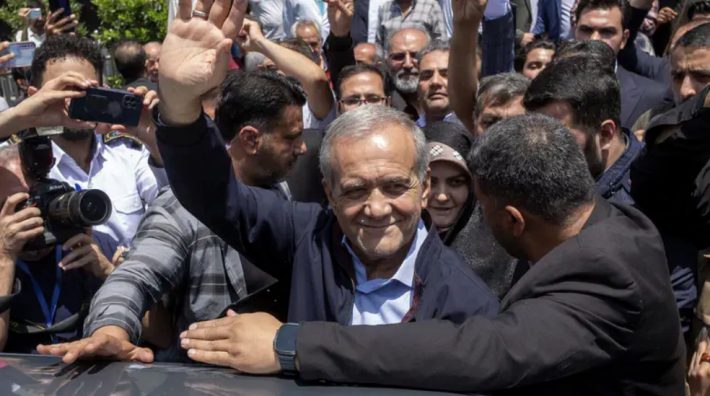
Iranian President Masoud Pezeshkian delivered a robust and unyielding defense of his country’s ballistic program on Tuesday, characterizing Tehran’s rocket technology as an absolute, non-negotiable red line. Speaking during an official diplomatic visit to Pakistan—a key mediating nation facilitating critical dialogue between Washington and Tehran—Pezeshkian framed the arsenal as the only barrier preventing complete national annihilation.
The president explicitly invoked the ongoing conflict in the Gaza Strip to justify Iran’s heavily armed posture against Western allies, drawing a direct parallel to regional vulnerabilities:
“If the missiles we have for our defense did not exist, Israel and the United States would have ploughed Iran just like Gaza, showing no mercy to either the old or the young.” — Masoud Pezeshkian, President of Iran
Pezeshkian completely shut down any prospects of future Western-led concessions regarding the weapon programs, stating unequivocally: “We will never negotiate with anyone, under any circumstances, ever, about our defensive capabilities.”
Exclusion of Ballistic Programs from Truce Blueprints
The Iranian administration’s hardline position aligns with the structural parameters of ongoing diplomatic negotiations. Pakistani Prime Minister Shehbaz Sharif confirmed that the preliminary truce blueprint—newly signed by American and Iranian representatives alongside international mediators—completely omitted any stipulations or restrictions regarding Tehran’s long-range rocketry.
This omission marks a significant operational development:
- Historical Context: The Islamic Republic first heavily invested in its domestic missile industry during the 1980s conflict with Iraq to offset its deficient air defense capabilities, steadily improving precision and range over subsequent decades.
- Prior Diplomatic Pressures: Traditionally, American diplomats had actively sought to loop both the ballistic enterprise and Tehran’s funding of regional proxy forces into broader negotiations surrounding Iran’s nuclear architecture.
Shift in Washington’s Deterrence Posture
While Israel has long categorized Iran’s expanding rocket enterprise as a direct threat to its national survival, a unexpected diplomatic shift has emerged from the White House.
U.S. President Donald Trump signaled a potential loosening of the United States’ historically rigid stance on the missile issue. Commenting last week while attending the G7 summit in France, Trump remarked, “I’m saying that if other countries have them, it’s a little bit unfair for them not to have some.” This rhetorical pivot has provided the Iranian regime with the leverage necessary to solidify its ballistic defense parameters within the new regional architecture.