
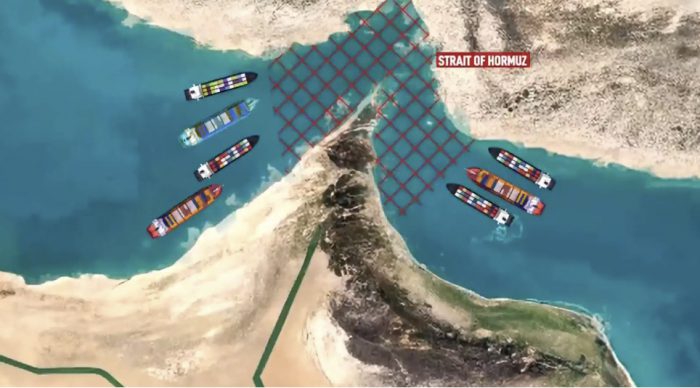
The Sultanate of Oman established a provisional commercial maritime route to safeguard global shipping transit.
In direct coordination with the International Maritime Organization (IMO), the Sultanate of Oman has formally enacted an interim shipping route tailored for commercial vessels navigating the strategic Strait of Hormuz. According to the state-run Oman News Agency (ONA), this provisional maritime corridor is open to all global traffic.
To ensure safe passage, vessel operators are required to coordinate their transits with the international shipping regulator while adhering to explicit coordinates issued jointly by the IMO and Omani authorities.
Political Alignment and Sovereignty Commitments
The creation of this emergency shipping corridor serves as a direct functional complement to the broader diplomatic progress and strategic understandings newly reached between the United States and Iran.
The initiative follows a high-level diplomatic summit in Muscat involving senior Iranian and Omani officials, including Iranian Parliament Speaker Mohammad Bagher Ghalibaf and Foreign Minister Abbas Araghchi:
- Affirmation of Sovereign Rights: Following their bilateral talks, Oman and Iran issued a joint statement as coastal states of the chokepoint, explicitly reaffirming their sovereignty and sovereign rights over their respective territorial waters while pledging to maintain safe passage in accordance with international law.
- Commitment to Tariff-Free Navigation: Emphasizing its alignment with established global maritime conventions and the law of the sea, Muscat stressed its dedication to maintaining unhindered navigational freedom throughout the chokepoint without levying any usage or passage tariffs on transit vessels.
Friction with U.S. Deterrence Framework
The collaborative Omani-Iranian framework stands in contrast to recent hardline economic and military rhetoric originating from Washington:
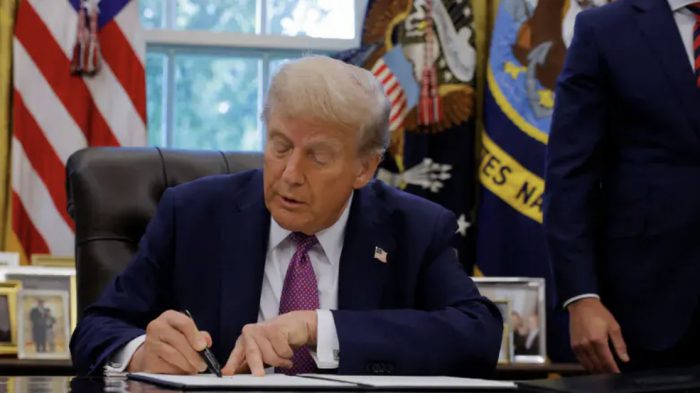
- U.S. Operational Threats: U.S. President Donald Trump publicly stated that Washington could assume the role of a “guardian angel” over the Strait of Hormuz and appropriate 20% of the transit oil. Trump issued a direct warning to the Iranian regime, threatening to take physical control of the strait and impose unilateral transit fees if a comprehensive agreement is not reached.
- Provisional Commitments: Prior to these developments, Iran had only agreed to guarantee the free, safe passage of commercial vessels for a restricted 60-day window across the Persian Gulf and the Gulf of Oman.
- Lifting of the Blockade: Following the subsequent signing of a formal memorandum of understanding with the Islamic Republic, the United States successfully dismantled the naval blockade it had previously enforced in the theater during active hostilities.